
- Client Duong Do dinh - (0986490xxx) bought 8 month ago (25/11/2025)
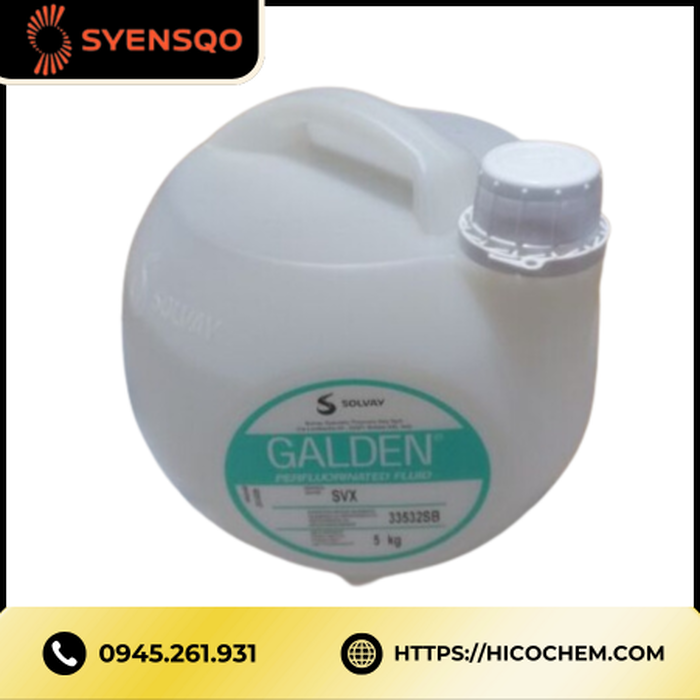
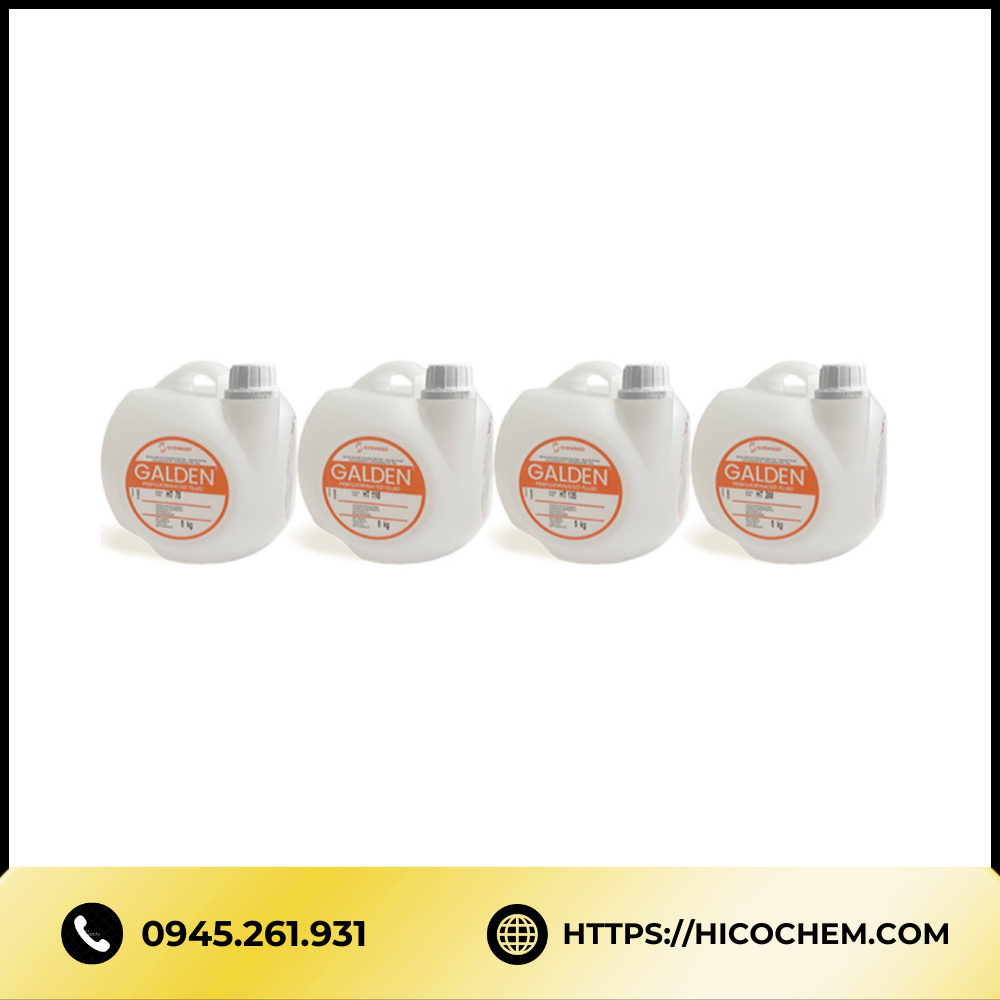
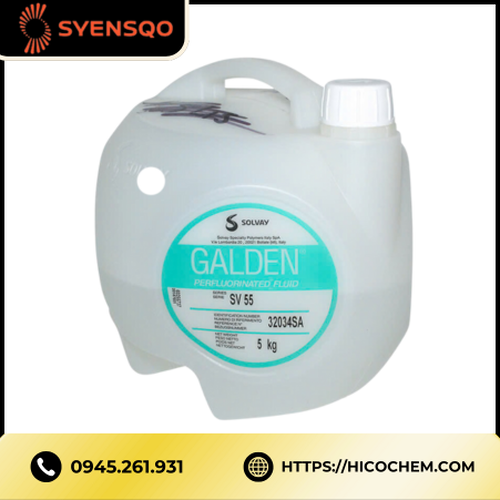
Galden SVX
4 5 (1 evaluate)Category: Galden® SV
Maker: Syensqo
Made in: Italy
Packaging: 1kg, 5kg
Shipping: We provide door-to-door worldwide shipping services using UPS or FedEx
Galden® SVX: High-Performance Inert PFPE Fluid for Dielectric and Heat-Transfer Applications
Galden® SVX is a high-purity perfluoropolyether (PFPE) fluid developed for industrial processes requiring electrical insulation, thermal stability, chemical inertness and dependable compatibility with engineering materials. Unlike the numbered Galden® SV55–SV135 grades, which are primarily presented as low-molecular-weight cleaning solvents, SVX is currently positioned by Syensqo for heat-transfer and dielectric applications.
This distinction is important for semiconductor process engineers, electronics reliability teams, QA/QC specialists and equipment designers. Galden® SVX should be selected according to the thermal, electrical and material-compatibility requirements of the system—not simply according to solvent evaporation rate.
What Is Galden® SVX?
Galden® SVX is an inert fluorinated fluid based on perfluoropolyether chemistry. Syensqo describes it as a high-performance fluid suitable for applications requiring high thermal stability, good dielectric properties, excellent chemical inertness and compatibility with metals, plastics and elastomers. The manufacturer also states that SVX has no flash point, fire point or autoignition point.
The PFPE molecular structure provides a combination of strong carbon–fluorine bonds and flexible ether linkages. In practical terms, this gives Galden® fluids their characteristic chemical stability, electrical insulation and ability to function under demanding temperature conditions.
SVX differs from Galden® SV55, SV70, SV80, SV110 and SV135. The numbered SV products form a solvent range whose grades are differentiated mainly by boiling point, vapor pressure and evaporation rate. SVX is not presented by Syensqo as the next boiling-point grade in that sequence. It is a special-purpose PFPE fluid primarily selected for dielectric performance and thermal management.
Consequently, engineers should not assume that SVX is interchangeable with SV110 or SV135 in an existing cleaning process. Product substitution requires review of the current technical data sheet, safety data sheet, operating temperature, circulation system, seals, electrical requirements and process qualification criteria.
Key Features and Process Benefits
| Key feature | Practical benefit for plant engineers |
|---|---|
| High thermal stability | Supports reliable fluid performance in temperature-controlled equipment and demanding thermal cycles |
| Good dielectric properties | Enables direct contact with compatible electrical and electronic components in qualified systems |
| Excellent chemical inertness | Helps prevent reaction with process hardware, components and surrounding materials |
| No flash or fire point | Reduces fire risk compared with many hydrocarbon-based thermal fluids |
| No autoignition point | Supports safer operation in properly engineered elevated-temperature systems |
| Low moisture absorption | Helps limit water-related changes in electrical and process performance |
| High purity | Supports contamination-sensitive semiconductor and electronics processes |
| Low-VOC classification | Assists facilities seeking lower-volatility specialty-fluid options |
| Broad chemical resistance | Provides resistance to acids, alkalis, alcohols, detergents, fuels and many process chemicals |
| Compatibility with engineering materials | Can be evaluated with metals, plastics and elastomers used in industrial equipment |
| Resistance to hydrolysis and radiation | Supports specialized processes exposed to moisture or gamma radiation |
| Transparent fluid behavior | Facilitates visual inspection of fluid condition, bubbles and contamination in suitable equipment |
Syensqo lists bromine-free composition, chlorine resistance, hydrolysis resistance, low moisture absorption, dielectric behavior, non-flammability, UV resistance and gamma-radiation resistance among the product functions associated with Galden® SVX.
For reliability and process engineers, chemical inertness can help reduce corrosion, deposit formation and fluid degradation. However, contamination introduced from external sources—including oils, moisture, seal extractables and particles—may still affect fluid performance. Filtration, fluid-condition monitoring and contamination-control procedures remain necessary.
Syensqo advises that compatibility depends not only on the base polymer but also on the complete formulation of seals, gaskets and hoses. The actual production materials should therefore be tested under representative temperature, exposure and cycling conditions.
Technical Properties
Syensqo’s publicly accessible SVX product page currently provides performance classifications rather than a complete numerical property table. Exact values for boiling point, density, viscosity, vapor pressure, pour point and thermal properties should be obtained from the latest region-specific TDS.
| Property | Publicly stated information |
|---|---|
| Chemical family | Perfluoropolyether—PFPE |
| Product type | High-performance inert fluorinated fluid |
| Primary functions | Dielectric service and heat transfer |
| Purity profile | High purity |
| Thermal stability | High |
| Chemical inertness | Excellent |
| Dielectric behavior | Good dielectric properties |
| Moisture behavior | Low moisture absorption |
| Flammability | Non-flammable |
| Flash point | None stated |
| Fire point | None stated |
| Autoignition point | None stated |
| Material compatibility | Good compatibility with metals, plastics and elastomers, subject to testing |
| Chemical resistance | Resistance to acids, alkalis, alcohols, fuels, glycols, detergents and mineral or synthetic oils |
| Radiation resistance | Gamma-radiation resistant |
| Compliance information listed | WEEE, RoHS compliance and halogen reports |
| Regional availability shown by Syensqo | Asia-Pacific |
These are product descriptors rather than guaranteed specification limits. Equipment designers should request the current TDS, SDS and certificate of analysis before defining pump capacity, heat-exchanger area, operating pressure, electrical-clearance requirements or incoming QA/QC limits.
As family-level reference data, Syensqo reports a dielectric strength of 40 kV at a 2.54 mm gap and volume resistivity of approximately 1.5×10151.5 \times 10^{15}1.5×10¹⁵ ohm·cm for Galden® PFPE fluids. These values demonstrate the electrical-insulation capability of the chemistry, but they should not replace the current SVX product specification when designing or validating equipment.
Galden® SV Series Comparison
The table below distinguishes the numbered cleaning-solvent grades from SVX. Numerical values for SV55, SV80, SV110 and SV135 are typical manufacturer data rather than guaranteed specifications.
| Grade | Boiling point | Density | Viscosity at 25°C | Surface tension | Vapor pressure at 20°C | Primary selection focus |
|---|---|---|---|---|---|---|
| Galden® SV55 | 55°C | 1.65 g/cm³ | 0.45 cSt | 10 dyne/cm | 228 torr | Fastest evaporation and shortest cleaning contact time |
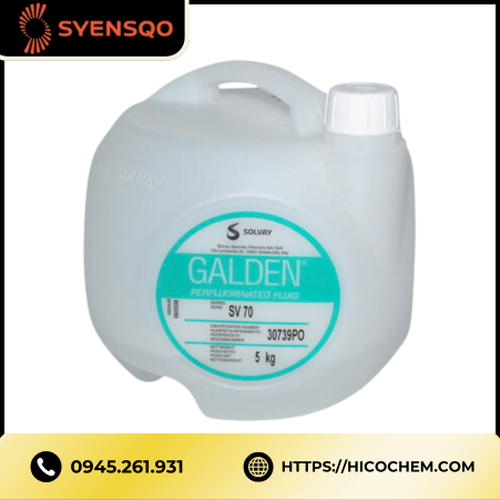
| Galden® SV70 | Approximately 70°C* | Confirm with current TDS | Confirm with current TDS | Confirm with current TDS | Confirm with current TDS | Rapid drying with more working time than SV55 |
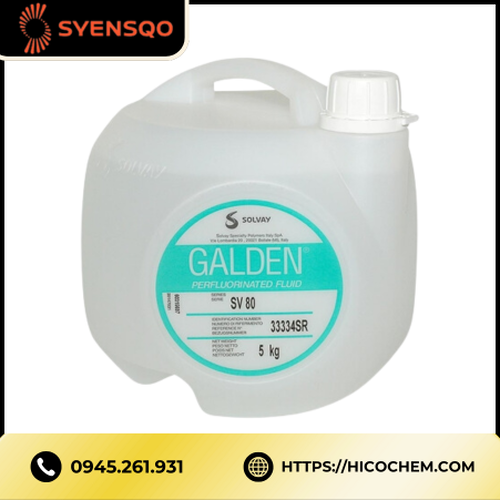
| Galden® SV80 | 80°C | 1.68 g/cm³ | 0.57 cSt | 16 dyne/cm | 62 torr | Balance between rapid drying and cleaning contact time |
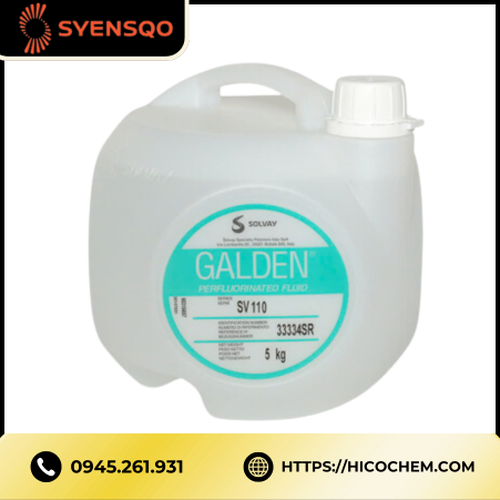
| Galden® SV110 | 110°C | 1.71 g/cm³ | 0.77 cSt | 16 dyne/cm | 17 torr | Controlled evaporation and extended PFPE-residue flushing |
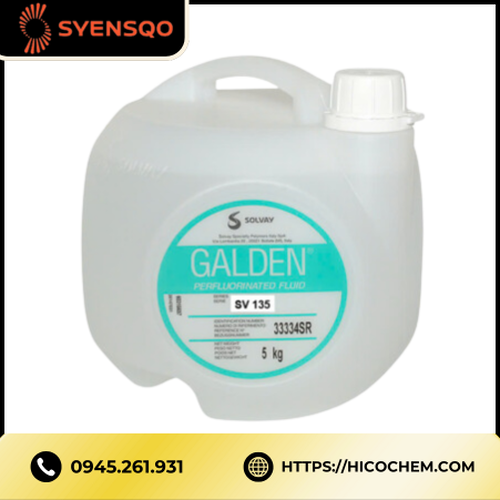
| Galden® SV135 | 135°C | 1.72 g/cm³ | 1.00 cSt | 17 dyne/cm | 8 torr | Longest contact time and lowest volatility among the numbered grades |
| Galden® SVX | Confirm with current TDS | Confirm with current TDS | Confirm with current TDS | Confirm with current TDS | Confirm with current TDS | Dielectric and heat-transfer applications rather than selection by cleaning evaporation rate |
*SV70 is a current product designation, but it is not included in the same legacy manufacturer property table used for SV55, SV80, SV110 and SV135.
The numbered SV solvents are low-molecular-weight PFPE fluids intended for cleaning operations, including application to hot parts, preheated-fluid cleaning and pressure spraying. Manufacturer literature also identifies PFPE lubricant dilution, pump cleaning, degreasing and residue removal as uses for these grades.
SVX should be evaluated separately. Its principal engineering value is thermal stability, dielectric performance and chemical inertness. Selecting SVX solely because it appears in the broader “SV” portfolio could result in an incorrect process match.
COO for Galden SVX
_pdf.png)
Common Applications
1. Semiconductor Equipment Thermal Management
Galden® SVX may be considered for temperature-control systems in semiconductor manufacturing equipment where dielectric behavior, chemical cleanliness and material compatibility are essential. Fluid selection must account for the required temperature range, heat load, flow rate and equipment design.
2. Dielectric Cooling of Electrical Components
SVX can support qualified cooling systems where a non-flammable, electrically insulating fluid must operate near compatible electronic components. Typical engineering checks include dielectric strength, fluid purity, filtration, heat-transfer efficiency and long-term material compatibility.
3. Electronic Reliability Testing
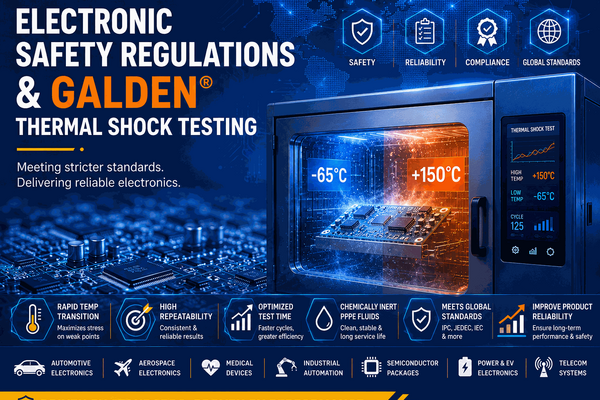
The broader Galden® PFPE family is used in electronic testing and cooling, including thermal conditioning and hermetic-seal-related processes. SVX may be evaluated for product-specific test systems when its current technical data match the applicable procedure and equipment requirements.
4. Temperature-Controlled QA/QC Baths
QA/QC laboratories may use inert dielectric fluids in controlled-temperature baths for sensors, modules, components or sealed assemblies. SVX can be considered where the test requires chemical inertness and stable electrical behavior.
5. Heat Transfer in Chemically Aggressive Environments
Its resistance to acids, alkalis, fuels, glycols, detergents and hydrolysis makes SVX relevant to specialized thermal systems in which conventional fluids may react with process chemicals or construction materials.
6. High-Purity Research and Process Equipment
SVX may also be evaluated for laboratory, electronics and precision-manufacturing equipment requiring a clean, inert and non-flammable fluid. Engineers should confirm whether an open bath, closed circulation loop or vapor-managed system is appropriate.
Frequently Asked Questions
1. Is Galden® SVX a cleaning solvent?
SVX is currently positioned primarily as a dielectric and heat-transfer fluid. For PFPE cleaning and dilution, the numbered SV55–SV135 grades are the more directly documented solvent products.
2. Is Galden® SVX flammable?
Syensqo states that SVX has no flash point, fire point or autoignition point. Appropriate ventilation and temperature control are still required because overheating PFPE fluids can generate hazardous decomposition products.
3. What is the difference between SVX and SV135?
SV135 is a numbered cleaning solvent with a published nominal boiling point of 135°C. SVX is a special-purpose dielectric and heat-transfer fluid and should be selected using its own current TDS.
4. Can SVX contact electronic components?
Its dielectric properties support qualified contact with compatible electronic components. The complete assembly, operating voltage, fluid purity and test method must be validated.
5. Is SVX compatible with plastics and elastomers?
Syensqo reports good general compatibility, but actual seals, hoses, coatings and adhesives must be tested because formulated materials can behave differently from their base polymers.
6. Can SVX replace a hydrocarbon heat-transfer oil?
It may offer advantages in non-flammability, dielectric behavior and chemical inertness, but replacement requires a full engineering review of viscosity, density, heat capacity, thermal conductivity, pump performance and system seals.
7. Does SVX absorb moisture?
Syensqo classifies the product as having low moisture absorption. Fluid handling should still prevent exposure to humid air, contaminated containers and water-containing process materials.
8. Which documents are required before production use?
Engineering and QA/QC teams should obtain the latest SVX TDS, SDS, certificate of analysis, compliance documentation and manufacturer guidance before approving the fluid or establishing acceptance limits.
AAdministratorsQTV
Welcome. Feel free to leave a comment, we will respond soon