
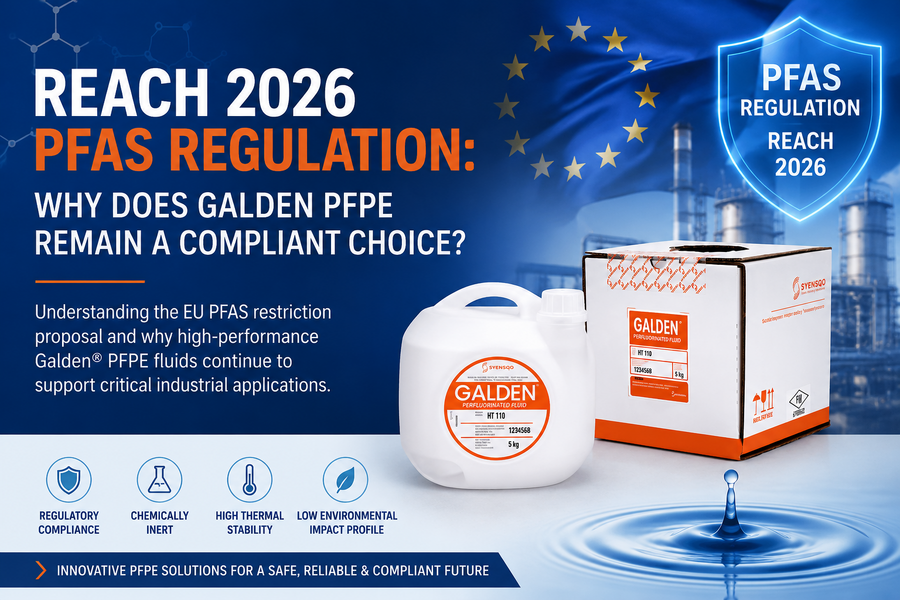
What Does REACH 2026 Actually Require for PFAS?
The EU’s broad PFAS restriction proposal was submitted to the European Chemicals Agency (ECHA) in January 2023 by Denmark, Germany, the Netherlands, Norway, and Sweden. The proposal aims to restrict the manufacture, placing on the market, and use of thousands of substances falling within the broad PFAS definition.
However, an important legal distinction must be made between a proposed restriction and a binding regulation.
A proposed restriction is a regulatory proposal that undergoes scientific, technical, economic, and public consultation processes. ECHA’s Committee for Risk Assessment (RAC) and Committee for Socio-Economic Analysis (SEAC) evaluate the proposal before the European Commission can develop a final regulatory measure.
A binding restriction, by contrast, becomes legally enforceable only after the formal EU legislative process has been completed and the relevant amendment to REACH Annex XVII has been officially adopted and published.
Therefore, describing “REACH 2026” as an immediate, comprehensive ban on every PFAS-containing material is legally inaccurate.
For industrial users, compliance should instead be evaluated according to the specific chemical identity, product grade, application, exposure scenario, and applicable regulatory conditions or derogations.
Quick Answer: The broad EU PFAS restriction remains a regulatory process rather than a blanket ban that automatically prohibits every PFAS or PFPE product. Industrial users should evaluate individual product grades and applications and monitor the final regulatory requirements issued by the EU authorities.
Are All PFAS Chemically the Same?
One of the most common misconceptions surrounding PFAS regulation is the assumption that all fluorinated substances present the same environmental or health risks.
They do not.
PFAS represents an extremely broad chemical family containing substances with substantially different molecular structures, molecular weights, physicochemical properties, and environmental behavior.
Legacy PFAS such as PFOA, PFOS, and PFHxS have received significant regulatory attention because of their persistence, environmental mobility, bioaccumulation potential, and associated health concerns. Several of these substances are already subject to stringent restrictions under international and EU chemical regulations.
PFPE fluids represent a very different class of fluorinated materials.
Although PFPEs may fall within the broad chemical definition of PFAS, their high molecular weight polymeric or oligomeric structures and highly inert chemical characteristics distinguish them technically many low-molecular-weight PFAS compounds.
This distinction is critical:
Chemical identity does not automatically determine regulatory status.
A substance may fall within a broad PFAS definition while still being subject to a different regulatory assessment based on its specific characteristics, application, exposure pathway, and potential risk-management measures.
What Is PFPE and Where Does Galden® Fit?
Perfluoropolyether (PFPE) is a family of fluorinated synthetic fluids containing carbon, fluorine, and oxygen, with ether linkages incorporated the molecular backbone.
Galden® PFPE fluids Syensqo are engineered for demanding industrial environments where conventional hydrocarbon or silicone-based fluids may not provide sufficient performance.
According to the technical information supplied by the manufacturer, Galden® PFPE fluids offer several properties that are particularly relevant to advanced industrial applications:
- High thermal stability, supporting demanding temperature-control applications.
- Exceptional chemical inertness, minimizing reactions with many aggressive chemicals and process environments.
- Excellent dielectric properties, making suitable grades useful in electronics and electrical applications.
- Non-flammability, with no conventional flash point, supporting applications where fire risk must be minimized.
- Low surface tension and clean evaporation characteristics, which are valuable for controlled industrial and cleanroom processes.
These properties have enabled PFPE fluids to serve highly specialized applications, including thermal management, semiconductor testing, pharmaceutical freeze-drying, electronics manufacturing, and vapor-phase soldering.
PFAS Restrictions vs. PFPE: Why the Distinction Matters
For industrial Compliance, QA/QC, EHS, and Purchasing teams, the most useful approach is to distinguish between regulatory scope and application-specific risk.
| Criterion | Highly Restricted Legacy PFAS | PFPE / Galden® PFPE |
|---|---|---|
| Typical chemistry | Low-molecular-weight perfluoroalkyl substances | High-molecular-weight PFPE fluids |
| Representative examples | PFOA, PFOS, PFHxS | Galden® PFPE grades |
| Functional structure | Often acid, sulfonate, or related functional groups | Fluorinated ether backbone |
| Typical applications | Firefighting foams, surface treatments, consumer applications | Heat transfer, dielectric cooling, vacuum lubrication, pharmaceutical processing |
| Environmental exposure | Potentially released through widespread use and disposal | Often used in controlled industrial systems |
| Regulatory approach | Several substances already subject to stringent restrictions | Regulatory status must be evaluated by grade and application |
| Compliance strategy | Phase-out where legally required | Documented product- and application-specific compliance |
This comparison does not mean that PFPE is permanently exempt all future PFAS regulation. Instead, it highlights why industrial users should avoid treating every PFAS-related substance as legally and technically identical.
Why Does Galden® PFPE Remain Valuable for Advanced Industrial Applications?
a regulatory risk-management perspective, the value of Galden® PFPE extends beyond its chemical properties.
1. Technical Essentiality
Certain industrial applications require a combination of properties that conventional fluids cannot easily provide.
Semiconductor thermal-shock testing, pharmaceutical freeze-drying, advanced electronics cooling, and other demanding processes may require high thermal stability, dielectric performance, chemical inertness, and low flammability simultaneously.
Replacing PFPE without a technically validated alternative could therefore introduce new operational risks.
2. Documented Regulatory Compliance
For international procurement, compliance documentation is critical.
Industrial users should maintain current SDS and TDS documentation and verify the applicable REACH status, chemical identity, product grade, and relevant environmental declarations for the exact product being purchased.
Compliance should always be assessed using current manufacturer documentation rather than relying solely on generic statements about “PFAS.”
3. Controlled and Closed-Loop Applications
Many advanced industrial applications use specialty fluids within controlled or closed systems.
Where fluid recovery, containment, monitoring, and recycling are implemented effectively, environmental exposure can be significantly reduced.
For this reason, application conditions and emission scenarios are important considerations when evaluating future regulatory requirements.
What Should Companies Check Before Purchasing Galden® PFPE?
A robust compliance process should include at least the following checks:
- Product Grade – Confirm the exact Galden® grade required for the process.
- Chemical Identity – Verify the applicable CAS number and chemical description.
- Current SDS – Obtain the latest Safety Data Sheet applicable to the market.
- TDS – Confirm boiling point, viscosity, freezing point, dielectric characteristics, and other critical specifications.
- REACH/SVHC Status – Verify the regulatory status of the specific product.
- Environmental Documentation – Check relevant RoHS and other customer-specific requirements.
- Intended Use – Confirm that the application is technically and regulatorily appropriate.
- Emission Scenario – Establish containment, recovery, and recycling procedures where applicable.
- Supplier Declaration – Request appropriate Certificates of Compliance or manufacturer declarations.
This process provides a much stronger compliance foundation than simply asking whether a material is “PFAS-free.”
Is Galden® PFPE a Future-Proof Industrial Solution?
“Future-proof” should not mean claiming that a product can never be regulated.
For specialty chemicals, a more realistic definition is the ability to maintain regulatory readiness as legislation evolves.
A practical future-proof strategy can be expressed as:
Future-Proof Strategy = Regulatory Monitoring + Documented Compliance + Controlled Application + Supplier Transparency + Product-Grade Assessment
Galden® PFPE can therefore remain a valuable solution for high-performance industrial applications where its technical characteristics are difficult to replace.
However, companies should continue monitoring ECHA and European Commission developments and reassessing their specific product grades and applications as the regulatory process progresses.
What This Means for Industrial Users
Should companies stop using Galden® PFPE because of PFAS concerns?
Not automatically.
Companies should not replace an established PFPE fluid simply because it falls under the broad chemical definition of PFAS.
Premature substitution may introduce other risks, including flammability, inadequate dielectric performance, insufficient thermal stability, contamination, equipment compatibility problems, or reduced process reliability.
A more appropriate approach is to:
- Maintain the current technically qualified product where legally permitted.
- Verify the regulatory status of the exact product grade.
- Keep SDS, TDS, CoA, and compliance documentation up to date.
- Implement appropriate containment and recovery procedures.
- Monitor ECHA and EU regulatory developments.
- Work with qualified suppliers to assess future regulatory scenarios.
For international manufacturers, this approach supports both operational continuity and responsible regulatory risk management.
FAQ
Is Galden® PFPE a PFAS?
Yes. Under the broad chemical definition of PFAS, PFPE materials can fall within the PFAS family because of their highly fluorinated molecular structures. However, PFPE should not automatically be equated with restricted legacy PFAS such as PFOA or PFOS.
Is PFAS completely banned under REACH 2026?
No. The broad PFAS restriction proposal has been undergoing the EU regulatory evaluation process. It should not be described as an immediate blanket ban covering every PFAS material.
Is the EU PFAS restriction already legally effective?
The proposed broad restriction is not the same as a final binding regulation. Companies must distinguish between substances already subject to existing restrictions and substances covered by the broader proposal.
Could PFPE be affected by future EU PFAS regulation?
Yes. PFPE may fall within the scope of a broad PFAS definition and therefore should be monitored as the regulatory process develops. The final requirements will depend on the adopted legislation, specific substance characteristics, applications, and any applicable derogations or transition periods.
Is Galden® PFPE REACH compliant?
Compliance must be verified for the specific Galden® product grade and intended market/application using current manufacturer and regulatory documentation. Companies should obtain the latest SDS, TDS, and relevant compliance declarations before making procurement or compliance decisions.
What should companies request when purchasing Galden® PFPE?
At minimum, companies should request current SDS and TDS documentation and verify applicable REACH, SVHC, RoHS, CoA, and manufacturer compliance documentation for the exact product grade.
Conclusion
The ongoing EU PFAS regulatory debate does not justify treating every fluorinated material as automatically prohibited.
For industrial users, the critical distinction is between broad PFAS chemical classification and the actual regulatory status of a specific substance, product grade, and application.
Galden® PFPE remains technically valuable because its combination of thermal stability, chemical inertness, dielectric performance, and non-flammability addresses demanding applications where conventional fluids may not provide an equivalent performance profile.
The most responsible strategy is therefore not to assume permanent exemption—or to panic and replace PFPE prematurely—but to establish a documented, product-specific compliance program supported by current ECHA requirements, manufacturer documentation, controlled use conditions, and continuous regulatory monitoring.
For industrial decision-makers, the question is not simply “Is it PFAS?” The more important question is: “What is the regulatory status of this specific PFPE grade, how is it being used, and what compliance conditions apply?”
Contact information
Hotline / WhatsApp: +84 945 261 931
Email: Sales@hicotech.com.vn



AAdministratorsQTV
Welcome. Feel free to leave a comment, we will respond soon