
- Client Duong Do dinh - (0986490xxx) bought 8 month ago (25/11/2025)
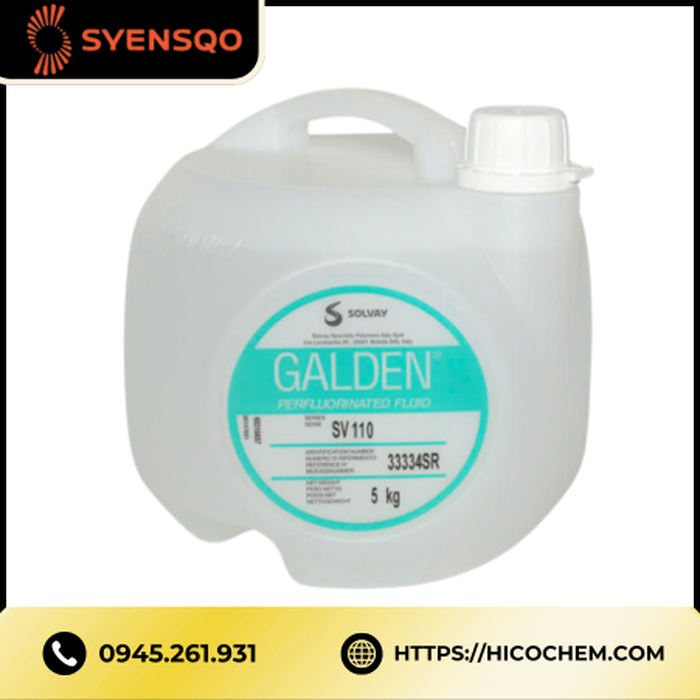
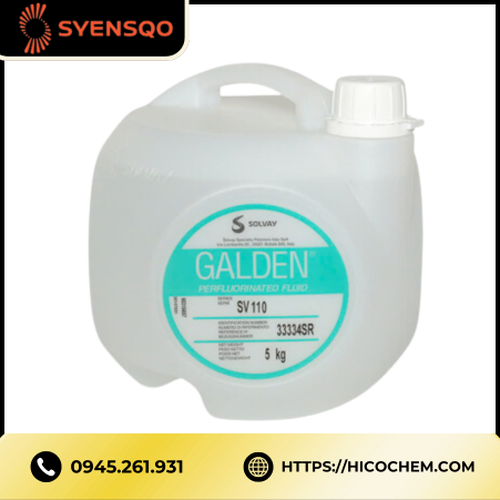
Galden SV 110
4 5 (1 evaluate)Category: Galden® SV
Maker: Syensqo
Made in: Italy
Packaging: 1kg, 5kg
What Is Galden® SV 110?
Galden® SV110 is a low-molecular-weight perfluoropolyether (PFPE) solvent developed for specialized cleaning, rinsing and carrier-fluid processes. Its nominal 110°C boiling point provides a practical balance between evaporation rate and working time for semiconductor equipment, vacuum systems, precision electronics and maintenance operations involving PFPE oils or greases.
The “110” designation refers to its nominal boiling point of 110°C. Compared with the lower-boiling SV55 and SV80 grades, SV110 has lower vapor pressure and remains on the cleaned surface longer. This provides process engineers with more time for wetting, dissolving and flushing contamination before evaporation. Compared with SV135, it evaporates more readily and may support shorter drying cycles.
A key characteristic of Galden® SV110 is its full miscibility with PFPE oils and greases. Galden® SV fluids are also miscible with perfluorocarbon fluids and with chlorotrifluoroethylene oils at temperatures above 45°C. SV110 is therefore particularly useful as a cleaning solvent, flushing fluid or diluent for fluorinated lubricants, including Fomblin® PFPE products.
Key Features and Process Benefits
| Key feature | Practical benefit for plant engineers |
|---|---|
| Nominal boiling point of 110°C | Provides longer contact time than SV55 or SV80 while retaining controlled drying |
| Vapor pressure of 17 torr at 20°C | Helps reduce evaporation losses compared with lower-boiling SV grades |
| Kinematic viscosity of 0.77 cSt at 25°C | Penetrates narrow gaps, pump passages, valve cavities and precision assemblies |
| Surface tension of 16 dyne/cm | Promotes wetting of complex surfaces and difficult-to-reach geometries |
| Full miscibility with PFPE lubricants | Enables removal, dilution or controlled application of fluorinated oils and greases |
| Non-flammable behavior | Reduces fire risk compared with many conventional hydrocarbon solvents |
| Dielectric properties | Supports validated cleaning of compatible electronic and electromechanical parts |
| Chemical and thermal stability | Helps maintain consistent performance under demanding process conditions |
| Zero ozone-depletion potential | Contains no CFCs, chlorine, bromine or iodine associated with ozone depletion |
| Broad material compatibility | Suitable for many metals, plastics and elastomers after application testing |
These characteristics make SV110 useful for processes that require both solvent penetration and sufficient working time. Its low viscosity supports circulation and drainage, while its moderate volatility can provide better process control than faster-evaporating SV grades.
Material compatibility should nevertheless be confirmed using the actual seal, gasket, coating, adhesive or polymer formulation installed in the equipment. Syensqo notes that formulated materials can behave differently from their base polymers; consequently, immersion testing under representative temperature, exposure and drying conditions remains good engineering practice.
Technical Properties
The values below are typical properties rather than guaranteed product specifications. Process limits, incoming-inspection requirements and QA/QC acceptance criteria should be based on the latest Syensqo technical data sheet and safety data sheet.
| Property | Unit | Typical value |
|---|---|---|
| Boiling point | °C | 110 |
| Density | g/cm³ | 1.71 |
| Surface tension | dyne/cm | 16 |
| Kinematic viscosity at 25°C | cSt | 0.77 |
| Heat of vaporization at boiling point | cal/g | 16 |
| Vapor pressure at 20°C | torr | 17 |
| Water solubility | ppm | 14 |
| Flash point | °C | None reported |
| Fire point | °C | None reported |
| Autoignition temperature | °C | None reported |
| Ozone-depletion potential | — | 0 |
The combination of 0.77 cSt viscosity and 17 torr vapor pressure explains SV110’s process profile. The fluid can enter small clearances and complex internal passages while remaining on the part longer than SV55 or SV80. Enclosed cleaning equipment, condensation zones and fluid-recovery systems can further reduce solvent consumption and improve process consistency.
Galden® SV Series Comparison
The principal criteria for selecting a Galden® SV fluid are boiling point, vapor pressure, viscosity and surface tension. Lower-boiling grades generally evaporate faster and provide shorter drying cycles, whereas higher-boiling grades remain on the component longer and can reduce rapid evaporative loss. Density and surface tension also influence fluid handling, surface wetting and penetration into narrow component geometries.
| Grade | Boiling point | Density | Viscosity at 25°C | Surface tension | Vapor pressure at 20°C | Evaporation and contact profile | Practical selection focus |
|---|---|---|---|---|---|---|---|
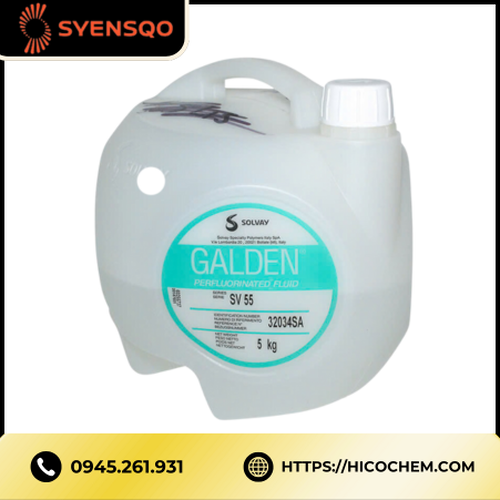
| Galden® SV55 | 55°C | 1.65 g/cm³ | 0.45 cSt | 14 dyne/cm | 228 torr | Very fast evaporation; shortest contact time | Rapid rinsing, fast drying and processes requiring minimum liquid residence time |
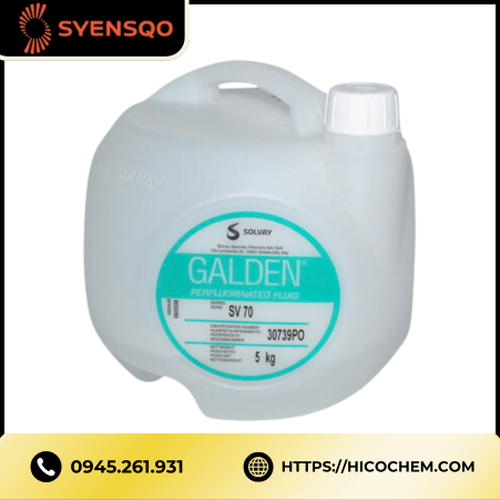
| Galden® SV70 | 70°C | 1.68 g/cm³ | 0.50 cSt | 14 dyne/cm | 141 torr | Fast evaporation; slightly longer working time than SV55 | Fast cleaning where SV55 evaporates too quickly |
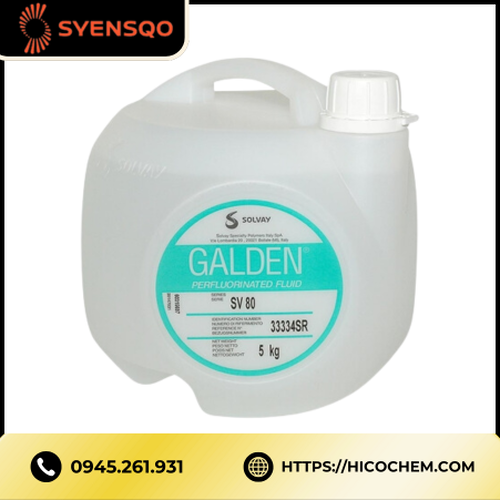
| Galden® SV80 | 80°C | 1.68 g/cm³ | 0.57 cSt | 16 dyne/cm | 62 torr | Moderately fast evaporation; balanced contact time | General precision cleaning and PFPE-lubricant removal requiring a balance between cleaning time and drying speed |
| Galden® SV110 | 110°C | 1.71 g/cm³ | 0.77 cSt | 16 dyne/cm | 17 torr | Controlled evaporation; medium-to-long contact time | Flushing internal passages, dissolving PFPE residues and cleaning processes requiring extended wetting time |
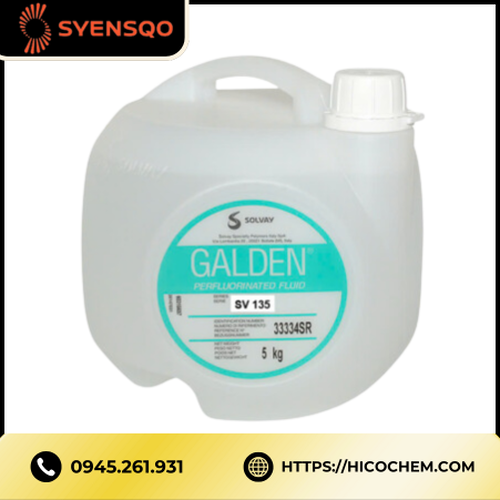
| Galden® SV135 | 135°C | 1.72 g/cm³ | 1.00 cSt | 17 dyne/cm | 8 torr | Slowest evaporation; longest contact time among the numbered SV grades | Extended soaking, heated cleaning and processes designed to minimize rapid solvent loss |
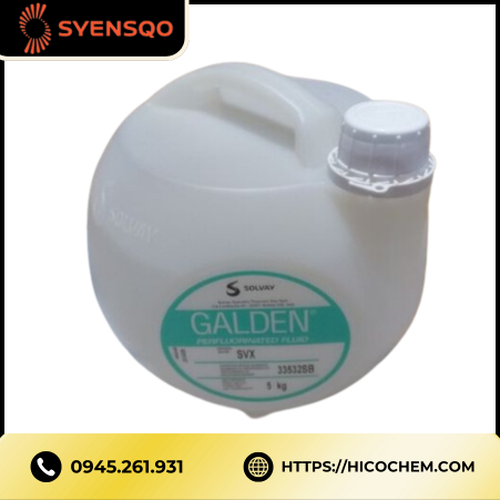
| Galden® SVX | Consult current TDS | Consult current TDS | Consult current TDS | Consult current TDS | Consult current TDS | Application-dependent | Specialized dielectric and heat-transfer applications requiring chemical inertness and thermal stability |
The numerical values for SV55, SV70, SV80, SV110 and SV135 are typical properties and are not intended as guaranteed specifications. The manufacturer’s comparative solvent brochure also reports water solubility below 10 ppm, zero ozone-depletion potential and no flash point, fire point or autoignition temperature for all five numbered grades.
Galden® SVX should be evaluated separately from the numbered cleaning-solvent grades. Syensqo describes SVX as an inert PFPE fluid intended primarily for dielectric and heat-transfer applications requiring high thermal stability, chemical inertness and compatibility with metals, plastics and elastomers. Its official public product page does not provide the same comparative property table published for SV55–SV135; therefore, engineers should obtain the current SVX technical data sheet before performing a direct numerical comparison.
For most precision-cleaning and PFPE-lubricant processes, SV110 provides the middle-to-high boiling option within the numbered range. Its vapor pressure of 17 torr at 20°C is substantially lower than that of SV55, SV70 and SV80, allowing the fluid to remain on the surface longer. At the same time, it evaporates more readily than SV135, helping reduce drying time after flushing or cleaning.
Common Applications
1. Vacuum-Pump and Vacuum-System Cleaning
SV110 can flush compatible PFPE oil and grease residues from pump housings, valves, internal passages and other vacuum components during preventive maintenance or equipment overhaul. Its miscibility with PFPE lubricants is especially valuable before inspection, repair or relubrication.
2. Semiconductor Equipment Maintenance
Its low viscosity, controlled evaporation and compatibility with fluorinated lubricants support precision cleaning of compatible semiconductor process-tool components. The cleaning procedure should be qualified against the actual contamination, substrate materials and cleanliness requirements.
3. PFPE Lubricant Dilution and Application
SV110 can serve as a carrier for preparing lower-viscosity PFPE lubricant solutions used in dipping, spraying or controlled thin-film deposition. The required lubricant concentration, coating thickness and evaporation stage should be established through process trials.
4. Precision Electronics and Electromechanical Components
The fluid may be evaluated for cleaning compatible connectors, sensors, relays and precision assemblies where non-flammability, dielectric behavior and low moisture absorption are beneficial. Equipment should normally be isolated and de-energized before cleaning.
5. Precision-Part Degreasing and Residue Removal
SV110’s wetting behavior and low viscosity can help clean narrow channels, blind holes, small cavities and detailed metal components. Cleaning effectiveness should be verified for the specific contaminant because solvent compatibility varies between PFPE residues, hydrocarbon oils, silicones, fluxes and adhesives.
6. Vapor Blanketing and Mixed-Solvent Processes
Manufacturer literature lists vapor blanketing, degreasing, flash-point improvement in solvent blends and trace-residue removal among the uses of Galden® SV fluids. Mixed-solvent formulations require formal safety, compatibility and process validation before production implementation.
Frequently Asked Questions
1. Is Galden® SV110 flammable?
Syensqo describes Galden® SV fluids as non-flammable. The published typical-property table reports no flash point, fire point or autoignition point. However, the current safety data sheet must still govern ventilation, personal protective equipment, temperature control and emergency procedures.
2. What is the difference between Galden® SV110 and SV80?
SV110 has a higher boiling point and lower vapor pressure. It remains on the component longer and provides greater cleaning contact time, but it normally dries more slowly than SV80.
3. Can Galden® SV110 remove PFPE grease?
Yes. Galden® SV fluids are fully miscible with PFPE oils and greases, making SV110 suitable for dissolving, diluting or flushing compatible fluorinated lubricant residues.
4. Can SV110 clean solder flux or conventional hydrocarbon oil?
SV110 is primarily optimized for compatibility with fluorinated fluids. Its performance on solder flux, silicone, hydrocarbon oil, adhesive or mixed contamination must be tested. A co-solvent or different cleaning chemistry may be required.
5. Is Galden® SV110 suitable for SMT equipment?
It can be evaluated for maintenance cleaning of compatible SMT equipment components, particularly where PFPE lubricant residues are present. It should not automatically be treated as a universal PCB or flux cleaner. Process qualification should include residue, cleanliness and material-compatibility testing.
6. Does Galden® SV110 leave residue?
The base fluid is high-purity and volatile, but final residue depends on dissolved contamination, bath condition, rinsing, drainage and drying. QA/QC engineers should define measurable cleanliness acceptance criteria appropriate to the component and production process.
7. How should Galden® SV110 be stored and handled?
Keep the fluid in its original sealed container, prevent contamination with water or foreign solvents and use compatible transfer equipment. Storage, ventilation, PPE and waste handling must follow the latest Syensqo safety data sheet and applicable local regulations.
AAdministratorsQTV
Welcome. Feel free to leave a comment, we will respond soon