
- Client Duong Do dinh - (0986490xxx) bought 8 month ago (25/11/2025)
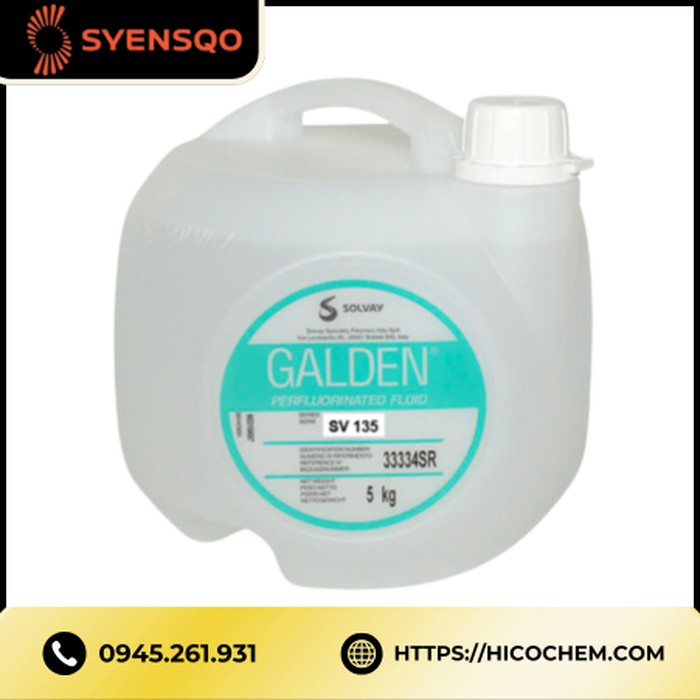
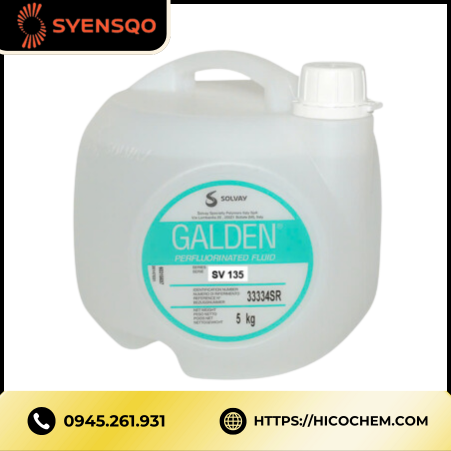
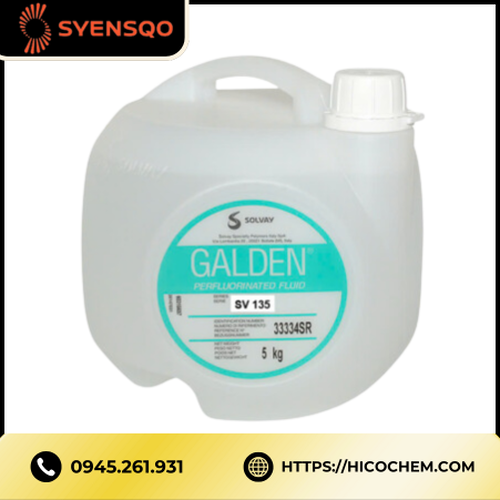
Galden SV 135
4 5 (1 evaluate)Category: Galden® SV
Maker: Syensqo
Made in: Italy
Packaging: 1kg, 5kg
What Is Galden® SV 135?
Galden® SV135 is a high-purity, low-molecular-weight perfluoropolyether (PFPE) fluid designed for specialized cleaning, flushing, degreasing and fluorinated-lubricant processing. Its nominal boiling point of 135°C and relatively low vapor pressure provide extended surface contact time, controlled evaporation and reduced rapid solvent loss compared with lower-boiling Galden® SV grades.
These characteristics make Galden® SV135 especially relevant to semiconductor facilities, electronics manufacturing plants, vacuum-system maintenance and precision industrial processes involving PFPE oils or greases.
Key Features and Process Benefits
| Key feature | Practical process benefit |
|---|---|
| Nominal boiling point of 135°C | Provides extended cleaning contact time and slower evaporation than lower-boiling SV grades |
| Vapor pressure of 8 torr at 20°C | Helps reduce rapid fluid loss in open or semi-enclosed processes |
| Kinematic viscosity of 1.00 cSt at 25°C | Supports circulation, spraying and penetration into narrow internal passages |
| Surface tension of 17 dyne/cm | Promotes wetting of detailed surfaces, cavities and complex component geometries |
| Full miscibility with PFPE oils and greases | Enables effective flushing, dilution and controlled application of fluorinated lubricants |
| Non-flammable behavior | Reduces ignition risk compared with many conventional hydrocarbon solvents |
| Dielectric properties | Supports validated cleaning of compatible electronic and electromechanical components |
| Very low water solubility | Helps limit moisture introduction into precision and vacuum-related processes |
| Chemical and thermal stability | Supports consistent performance under demanding industrial conditions |
| Zero ozone-depletion potential | Contains no CFCs, chlorine, bromine or iodine associated with ozone depletion |
The higher boiling point is particularly useful where lower-boiling fluids evaporate before they have sufficiently dissolved or displaced contamination. For process engineers, the longer working interval can improve flushing of pump channels, valve cavities, bearing housings and other internal geometries.
The trade-off is a longer drying or recovery stage. Cleaning systems may therefore require controlled heating, vacuum drying, filtered air or nitrogen purging, condensation equipment or an enclosed fluid-recovery design.
Syensqo also reports broad compatibility of Galden® SV fluids with metals and many commercially used rubbers, elastomers and plastics. Nevertheless, the actual seal compound, adhesive, coating or polymer formulation should be tested under representative exposure conditions before production approval.
Technical Properties
The following values are typical properties reported in the manufacturer’s Galden® SV technical literature. They are not guaranteed purchasing specifications.
| Property | Unit | Typical value |
|---|---|---|
| Boiling point | °C | 135 |
| Density | g/cm³ | 1.72 |
| Surface tension | dyne/cm | 17 |
| Kinematic viscosity at 25°C | cSt | 1.00 |
| Heat of vaporization at boiling point | cal/g | 16 |
| Vapor pressure at 20°C | torr | 8 |
| Water solubility | ppm | 14 |
| Flash point | °C | None reported |
| Fire point | °C | None reported |
| Autoignition temperature | °C | None reported |
| Ozone-depletion potential | — | 0 |
The technical data show why SV135 behaves differently from faster-drying grades. Its low vapor pressure supports longer residence time and lower immediate evaporation, while its viscosity remains sufficiently low for flushing, recirculation and penetration into small passages.
For QA/QC purposes, these typical values should not automatically become incoming-inspection limits. Approved specifications should be based on the latest Syensqo technical data sheet, safety data sheet, certificate of analysis and the plant’s validated process requirements.
Galden® SV Series Comparison
The principal criteria for selecting a Galden® SV fluid are boiling point, vapor pressure, viscosity and surface tension. Lower-boiling grades generally evaporate faster and provide shorter drying cycles, whereas higher-boiling grades remain on the component longer and can reduce rapid evaporative loss. Density and surface tension also influence fluid handling, surface wetting and penetration into narrow component geometries.
| Grade | Boiling point | Density | Viscosity at 25°C | Surface tension | Vapor pressure at 20°C | Evaporation and contact profile | Practical selection focus |
|---|---|---|---|---|---|---|---|
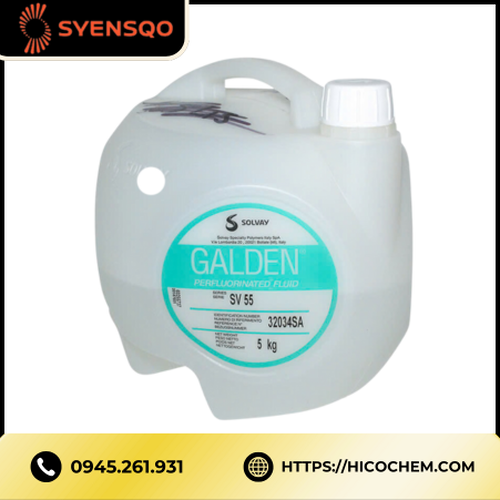
| Galden® SV55 | 55°C | 1.65 g/cm³ | 0.45 cSt | 14 dyne/cm | 228 torr | Very fast evaporation; shortest contact time | Rapid rinsing, fast drying and processes requiring minimum liquid residence time |
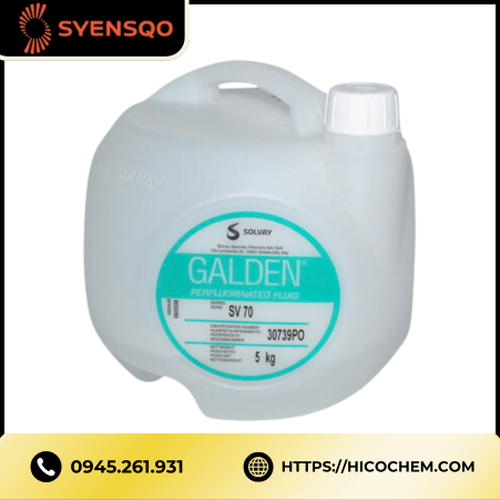
| Galden® SV70 | 70°C | 1.68 g/cm³ | 0.50 cSt | 14 dyne/cm | 141 torr | Fast evaporation; slightly longer working time than SV55 | Fast cleaning where SV55 evaporates too quickly |
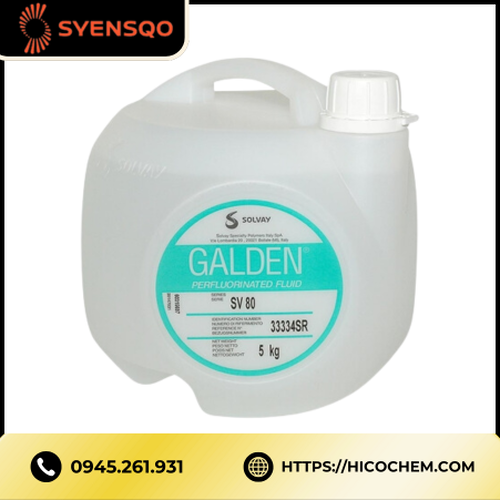
| Galden® SV80 | 80°C | 1.68 g/cm³ | 0.57 cSt | 16 dyne/cm | 62 torr | Moderately fast evaporation; balanced contact time | General precision cleaning and PFPE-lubricant removal requiring a balance between cleaning time and drying speed |
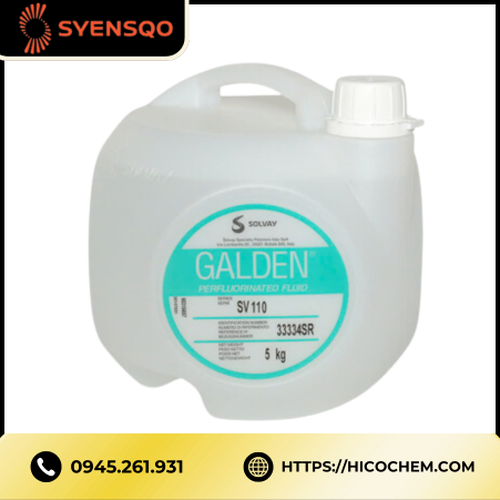
| Galden® SV110 | 110°C | 1.71 g/cm³ | 0.77 cSt | 16 dyne/cm | 17 torr | Controlled evaporation; medium-to-long contact time | Flushing internal passages, dissolving PFPE residues and cleaning processes requiring extended wetting time |
| Galden® SV135 | 135°C | 1.72 g/cm³ | 1.00 cSt | 17 dyne/cm | 8 torr | Slowest evaporation; longest contact time among the numbered SV grades | Extended soaking, heated cleaning and processes designed to minimize rapid solvent loss |
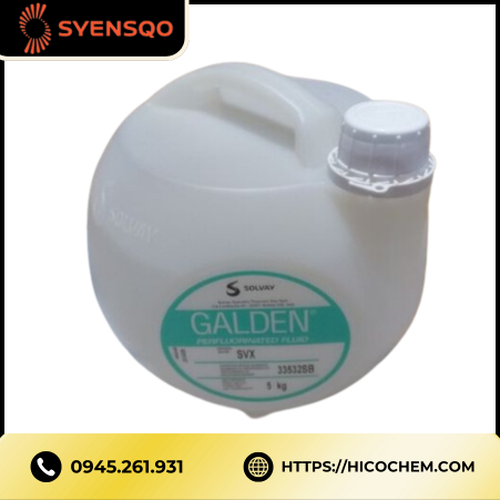
| Galden® SVX | Consult current TDS | Consult current TDS | Consult current TDS | Consult current TDS | Consult current TDS | Application-dependent | Specialized dielectric and heat-transfer applications requiring chemical inertness and thermal stability |
The numerical values for SV55, SV70, SV80, SV110 and SV135 are typical properties and are not intended as guaranteed specifications. The manufacturer’s comparative solvent brochure also reports water solubility below 10 ppm, zero ozone-depletion potential and no flash point, fire point or autoignition temperature for all five numbered grades.
Galden® SVX should be evaluated separately from the numbered cleaning-solvent grades. Syensqo describes SVX as an inert PFPE fluid intended primarily for dielectric and heat-transfer applications requiring high thermal stability, chemical inertness and compatibility with metals, plastics and elastomers. Its official public product page does not provide the same comparative property table published for SV55–SV135; therefore, engineers should obtain the current SVX technical data sheet before performing a direct numerical comparison.
Common Applications
1. PFPE Oil and Grease Removal
SV135 can dissolve and flush compatible PFPE lubricant residues from components before inspection, repair or relubrication. Its long contact time is advantageous where hardened deposits or complex internal passages require extended wetting.
2. Vacuum-Pump and Vacuum-System Maintenance
The fluid can be evaluated for cleaning pump housings, valves, fittings, bearing areas and vacuum-system components contaminated with PFPE oils or greases. Thorough drainage and drying are important before evacuation and recommissioning.
3. Semiconductor Process-Equipment Cleaning
SV135 is suitable for controlled cleaning of compatible semiconductor tool components where chemical inertness, non-flammability, high purity and low moisture absorption are important. The process must be qualified against particle, ionic, non-volatile-residue and material-compatibility requirements.
4. Precision Electronics and SMT Equipment Maintenance
SMT and electronics engineers may evaluate SV135 for maintenance cleaning of compatible machine parts, sensors, actuators, mechanical assemblies and lubricant-handling components. It should not automatically be classified as a universal solder-flux or assembled-PCB cleaner; contaminant-removal performance must be validated.
5. PFPE Lubricant Dilution and Thin-Film Application
Because it is fully miscible with PFPE oils and greases, SV135 may be used as a carrier fluid for dipping, spraying or applying controlled lubricant films. Engineers should define the dilution ratio, coating mass, evaporation conditions and final cleanliness acceptance criteria.
6. Degreasing, Residue Removal and Vapor Blanketing
Manufacturer literature identifies pump cleaning, degreasing, vapor blanketing, flash-point improvement in solvent combinations and trace-residue removal as typical Galden® SV applications. Mixed-solvent processes require formal compatibility and safety validation.
Frequently Asked Questions
1. Is Galden® SV135 flammable?
Syensqo describes Galden® SV fluids as non-flammable, and the published typical-property table reports no flash point, fire point or autoignition temperature. The current SDS must still be followed because excessive heating or thermal decomposition can introduce hazards.
2. What is the main difference between SV135 and SV110?
SV135 has a higher boiling point and lower vapor pressure. It provides longer contact time and lower rapid evaporation, whereas SV110 generally supports faster drying and shorter process cycles.
3. Can SV135 remove PFPE grease?
Yes. Galden® SV fluids are fully miscible with PFPE oils and greases. Actual cleaning time depends on grease consistency, contamination level, temperature, agitation and component geometry.
4. Does Galden® SV135 leave residue?
The base fluid is high-purity and volatile. However, dissolved contamination can remain if the component is not adequately rinsed, drained or dried. QA/QC engineers should evaluate non-volatile residue and final surface cleanliness after processing.
5. Is SV135 suitable for solder-flux cleaning?
It should not be assumed to remove every solder flux. Its principal technical advantage is compatibility with fluorinated fluids and PFPE lubricants. Flux-removal performance should be tested using the actual flux chemistry and cleanliness standard.
6. Can it be used on plastics and elastomers?
Syensqo reports broad compatibility, but commercial polymers contain fillers, plasticizers and additives that may affect performance. Test the actual component for swelling, cracking, weight change and changes in mechanical properties.
7. Why choose SV135 instead of a faster-evaporating grade?
Choose SV135 when long wetting time, controlled evaporation and reduced rapid solvent loss are more important than minimum drying time. It is especially useful for soaking, internal flushing and PFPE residue removal.
8. How should Galden® SV135 be stored and handled?
Keep the fluid in its original sealed container and prevent contamination with moisture, particles or incompatible chemicals. Use suitable ventilation, personal protective equipment and temperature controls in accordance with the latest Syensqo SDS and local regulations.
AAdministratorsQTV
Welcome. Feel free to leave a comment, we will respond soon