

- Client Duong Do dinh - (0986490xxx) bought 8 month ago (25/11/2025)
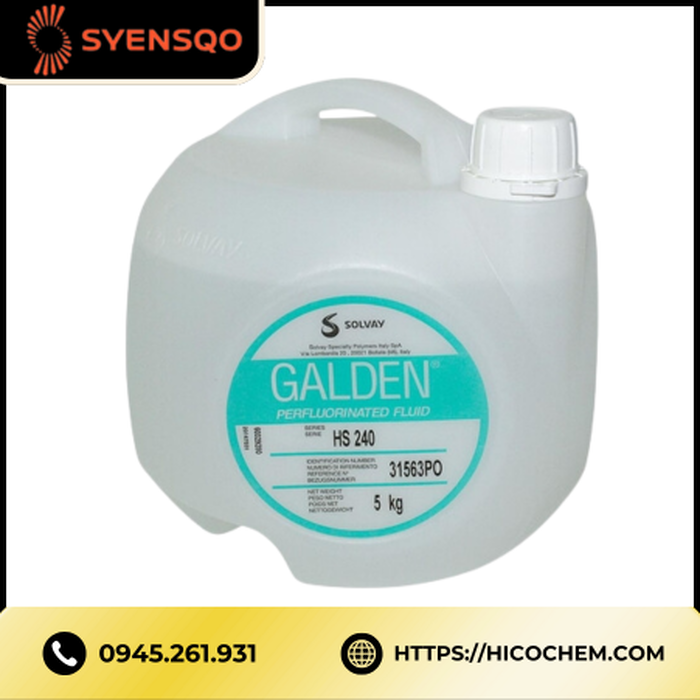
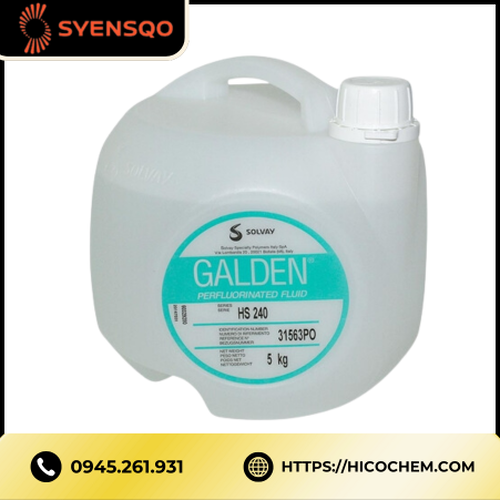
Galden® HS 240 - Vapor Phase Soldering Fluid
4 5 (1 evaluate)Category: Galden® LS/HS
Maker: Syensqo
Made in: Italy
Packaging: 1kg, 5kg
What Is Galden® HS 240?
Galden® HS 240 is a fully fluorinated perfluoropolyether fluid specifically designed for Vapor Phase Soldering, also known as condensation soldering. Its narrow molecular-weight distribution, strong carbon–fluorine bonds and flexible ether structure provide the thermal stability and controlled vapor behavior required for repeatable VPS production.
Galden® HS 240 is mainly selected for lead-free soldering processes requiring greater thermal margin than Galden® LS 230 can provide, but without using the higher 260°C vapor temperature of HS 260. The LS/HS family provides RoHS-compliant VPS fluids covering controlled process temperatures up to 260°C.
Key Features and Process Benefits
| Feature | Process and Customer Benefit |
|---|---|
| Controlled vapor temperature of 240°C | Provides a defined thermal ceiling for compatible lead-free soldering profiles and reduces uncontrolled temperature overshoot. |
| Narrow molecular-weight distribution | Maintains stable vapor behavior, supports process repeatability and minimizes undesirable boiling-point drift. |
| Uniform condensation heating | Transfers heat around large, small, shielded and irregularly positioned components, reducing thermal shadowing. |
| Additional thermal margin over LS 230 | Helps complete lead-free reflow processes that require more energy or a higher peak-temperature window than a 230°C vapor zone can provide. |
| Low heat of vaporization | Supports rapid heat transfer and residue-free drying after the assembly leaves the vapor zone. |
| Vapor density greater than air | Creates an inert vapor environment around the PCB assembly during preheating and soldering. |
| Excellent thermal and chemical stability | Helps maintain fluid performance during repeated high-temperature production cycles. |
| Good compatibility with construction materials | Minimizes corrosion and unwanted reactions with compatible Vapor Phase Soldering equipment materials. |
| Low decomposition-residue formation | Helps keep the soldering chamber clean and reduces deposit-related maintenance under recommended operating conditions. |
| Non-flammable PFPE composition | Has no flash point, fire point or auto-ignition point under standard test conditions, improving high-temperature process safety. |
| Strong dielectric properties | Provides electrical insulation appropriate for electronics-manufacturing environments. |
| Very low room-temperature vapor pressure | Helps limit fluid losses during idle periods when the machine is properly sealed, cooled and maintained. |
Syensqo’s LS/HS technical literature identifies controlled boiling temperatures, narrow molecular-weight distribution, rapid residue-free drying, inert-atmosphere heating, material compatibility and non-flammability as the principal benefits of this VPS fluid family.
Technical Properties
The following are typical properties of Galden® HS 240 at 25°C unless otherwise specified. These values are intended for product comparison and preliminary process evaluation rather than as guaranteed acceptance specifications.
| Property | Typical Value |
|---|---|
| Chemical family | PFPE |
| Physical form | Liquid |
| Boiling point / nominal vapor temperature | 240°C |
| Density at 25°C | 1.82 g/cm³ |
| Kinematic viscosity at 25°C | 5.30 cSt |
| Vapor pressure at 25°C | 1 Pa |
| Specific heat at 25°C | 973 J/kg·°C |
| Heat of vaporization at boiling point | 63 J/g |
| Thermal conductivity at 25°C | 0.07 W/m·°C |
| Coefficient of thermal expansion | 0.0011 cm³/cm³·°C |
| Surface tension | 20 dyne/cm |
| Dielectric strength | 40 kV at a 2.54 mm gap |
| Dielectric constant | 2.1 |
| Volume resistivity | 1 × 10¹⁵ Ω·cm |
| Average molecular weight | 1,085 amu |
| Flash, fire and auto-ignition points | None under standard tests |
The listed vapor pressure is 1 Pa at 25°C, not 1 torr. For process qualification, users should also review the current specification for Temperature Reflux Vapor, or TRV, and distillation range. These parameters are specifically controlled for Galden® LS/HS VPS grades.
Galden® LS/HS Series Comparison
The most important difference among Galden® LS and HS grades is their controlled vapor temperature. Selection should begin with the solder alloy’s liquidus temperature, the solder-paste supplier’s recommended peak window, required time above liquidus and the maximum temperature limits of the PCB, components and connectors.
| Grade | Vapor Temperature | Density at 25°C | Viscosity at 25°C | Vapor Pressure at 25°C | Typical Selection Profile |
|---|---|---|---|---|---|
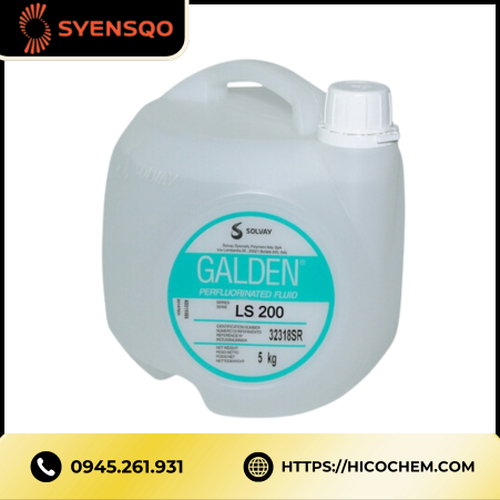
| Galden® LS 200 | 200°C | 1.79 g/cm³ | 2.50 cSt | 21 Pa | Tin-lead and compatible low-temperature solder profiles |
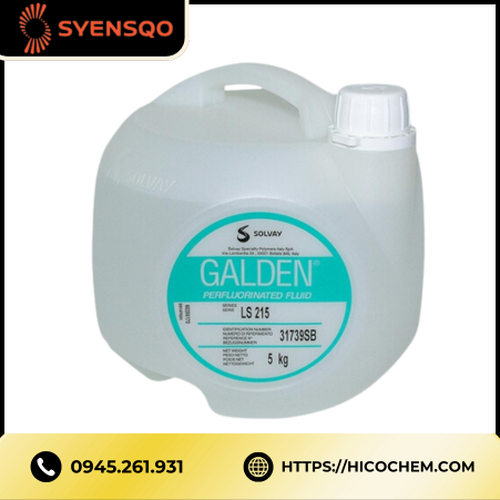
| Galden® LS 215 | 215°C | 1.80 g/cm³ | 3.80 cSt | 12 Pa | Lower-temperature or specially qualified lead-free processes |
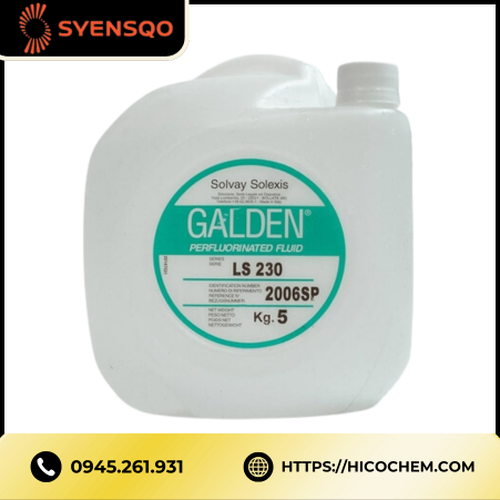
| Galden® LS 230 | 230°C | 1.82 g/cm³ | 4.40 cSt | 3.4 Pa | Mainstream lead-free processes compatible with a 230°C vapor zone |
| Galden® HS 240 | 240°C | 1.82 g/cm³ | 5.30 cSt | 1 Pa | Lead-free profiles requiring additional thermal margin |
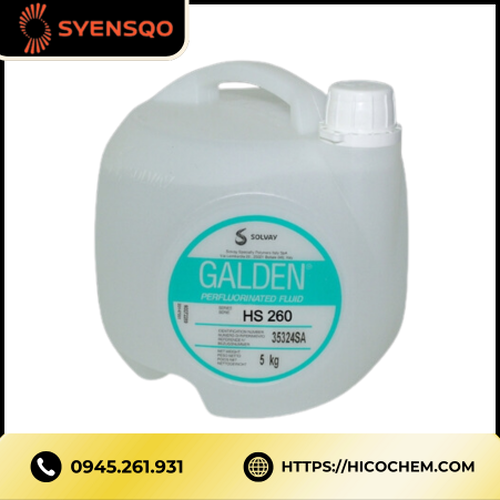
| Galden® HS 260 | 260°C | 1.83 g/cm³ | 7.00 cSt | 1 Pa | Specialized high-temperature soldering processes |
The numerical properties in this comparison are taken from the Galden® LS/HS Vapor Phase Soldering technical bulletin.
HS 240 Compared with LS 230
Galden® HS 240 provides a vapor temperature approximately 10°C higher than LS 230. This additional margin can help complete soldering profiles involving high thermal mass, difficult-to-heat assemblies or solder pastes that cannot achieve the required time above liquidus in a 230°C vapor environment.
LS 230 subjects assemblies to less thermal exposure and should generally be preferred when it can satisfy the approved soldering profile.
HS 240 Compared with HS 260
Galden® HS 260 provides a vapor temperature approximately 20°C higher than HS 240. It is intended for specialized high-temperature processes that cannot be completed at 240°C.
HS 240 offers lower peak thermal exposure and lower viscosity, making it the more balanced choice when 240°C provides sufficient process margin.
Why the Lowest Suitable Vapor Temperature Is Usually Preferred
Selecting a hotter grade than necessary may increase thermal stress on PCB laminates, connectors, polymers and moisture-sensitive components. The best practice is therefore to select the lowest Galden® LS/HS grade that can reliably meet the solder paste’s complete reflow requirements.
Common Applications
1. Lead-Free SMT Vapor Phase Reflow
Galden® HS 240 is primarily used as the working fluid in Vapor Phase Soldering systems processing lead-free printed circuit board assemblies.
Its controlled 240°C vapor zone provides additional process margin for compatible lead-free solder pastes whose required liquidus time or peak-temperature window cannot be achieved reliably with LS 230. The final profile must be validated against the solder-paste and component manufacturers’ requirements.
2. High-Thermal-Mass PCB Assemblies
Assemblies containing heavy copper layers, large connectors, transformers, inductors, heat spreaders or metal-core substrates may absorb heat more slowly than standard PCBAs.
Condensation heating surrounds exposed surfaces and transfers heat independently of directional airflow. HS 240 can therefore help reduce temperature differences between high-mass components and smaller surrounding devices.
3. Mixed-Component and Densely Populated PCBAs
Complex assemblies may combine small passive components, large integrated circuits, bottom-terminated packages, tall connectors and shielding structures.
Vapor can reach areas that are difficult to heat uniformly with convection airflow. This makes HS 240 suitable for compatible assemblies where thermal shadowing or uneven component temperatures complicate conventional reflow profiling. The benefit follows from the condensation-heating mechanism described by Syensqo.
4. Power Electronics and Heavy-Copper Boards
Power converters, motor drives, industrial power modules and other high-current assemblies often contain thick copper, large terminals and thermally demanding components.
HS 240 can provide the additional thermal margin needed to heat these assemblies uniformly while maintaining a defined maximum vapor-zone temperature. Qualification must account for the substrate, solder paste, component ratings and cooling profile.
5. Automotive, Industrial and High-Reliability Electronics
Galden® HS 240 may be used in qualified VPS processes for automotive control units, industrial controls, communication equipment and other high-reliability PCB assemblies.
Its repeatable vapor temperature and uniform heat transfer are valuable where consistent solder-joint formation is required across complex or high-mass assemblies. Application suitability depends on the approved manufacturing specification for each product.
6. Prototype, NPI and High-Mix Manufacturing
Vapor Phase Soldering is useful for prototype development, new-product introduction and high-mix production because the maximum vapor-zone temperature is primarily governed by the selected fluid.
Different compatible board designs can be processed without developing a completely new set of convection-zone temperatures for each assembly. Preheating, dwell time, board loading, cooling and vacuum settings—where applicable—must still be individually qualified.
Frequently Asked Questions About Galden® HS 240
1. What is Galden® HS 240 used for?
Galden® HS 240 is used as a PFPE working fluid in Vapor Phase Soldering equipment operating at a controlled vapor temperature of approximately 240°C. It is mainly selected for compatible lead-free PCB reflow processes requiring more thermal margin than Galden® LS 230 provides.
2. Is Galden® HS 240 suitable for lead-free soldering?
Yes. Galden® LS/HS grades are designed to provide RoHS-compliant, lead-free VPS solutions across vapor temperatures up to 260°C. HS 240 is appropriate when the selected solder paste can achieve its required peak temperature and time above liquidus within a 240°C vapor environment.
Not every lead-free solder paste automatically requires HS 240. LS 230 should be considered when a 230°C vapor zone can reliably complete the approved process with less thermal exposure.
3. What is the difference between Galden® HS 240 and LS 230?
HS 240 operates approximately 10°C hotter than LS 230. It provides greater thermal margin for high-mass assemblies and demanding lead-free profiles, but it also exposes components and PCB materials to a higher maximum process temperature.
LS 230 is generally preferable when it can meet all solder-paste and assembly requirements. HS 240 should be selected when qualification demonstrates that additional temperature margin is necessary.
4. What is the difference between Galden® HS 240 and HS 260?
HS 240 provides a nominal vapor temperature of 240°C, while HS 260 provides approximately 260°C. HS 260 is intended for specialized solder alloys or processes requiring substantially higher temperatures.
HS 240 has lower viscosity and limits thermal exposure compared with HS 260, making it more suitable when 240°C is sufficient for complete reflow.
5. How does Galden® HS 240 help prevent overheating?
The saturated vapor remains near its controlled reflux-vapor temperature. Vapor condenses on surfaces cooler than that temperature and releases heat until the assembly approaches thermal equilibrium.
This creates a naturally limited heating environment and reduces uncontrolled peak-temperature overshoot. However, dwell time, preheating, board loading and cooling must still be controlled to protect sensitive components.
6. Is Galden® HS 240 flammable or residue-forming?
Galden® PFPE fluids have no flash point, fire point or auto-ignition point under standard test conditions. Under recommended operating conditions, LS/HS fluids provide strong thermal and chemical stability and do not normally form decomposition residues.
Syensqo reports that thermal degradation generally begins around 290–300°C. Equipment failures that create localized temperatures above this range must therefore be prevented.
7. How long can Galden® HS 240 be stored?
Syensqo states that Galden® PFPE fluids remain chemically stable for more than 20 years when stored in their original sealed containers. Containers should remain closed, correctly labeled and protected from contamination.
In-service fluid life depends on machine design, fluid recovery, contamination, operating discipline and maintenance. Fluid quantity, vapor temperature and soldering performance should be monitored according to the VPS equipment manufacturer’s instructions.

AAdministratorsQTV
Welcome. Feel free to leave a comment, we will respond soon