
- Client Duong Do dinh - (0986490xxx) bought 8 month ago (25/11/2025)
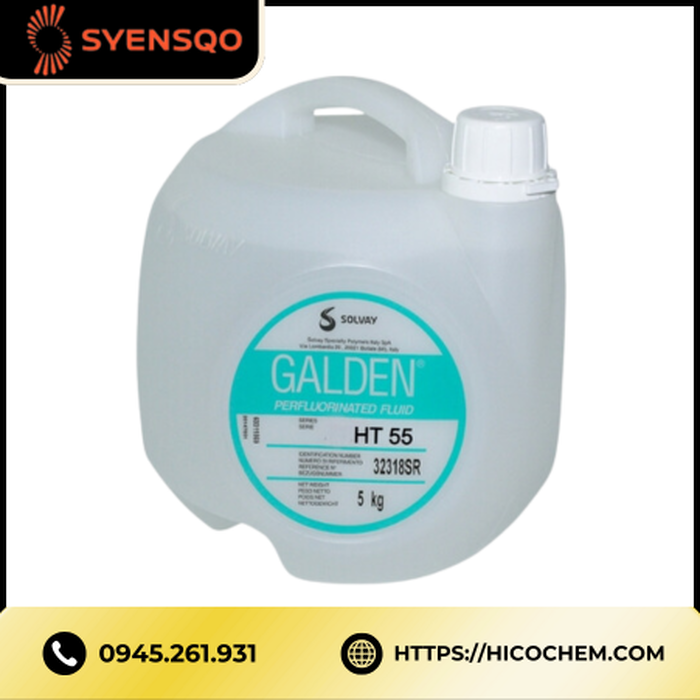
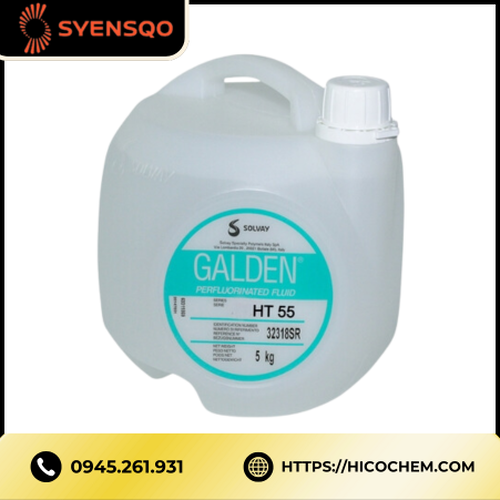
Galden HT 55
4 5 (1 evaluate)Category: Galden® HT
Maker: Syensqo
Made in: Italy
Packaging: 1kg, 5kg
What is Galden HT 55?
Galden HT 55 is a heat transfer liquid with exceptional thermal conductivity at elevated temperatures and strong dielectric characteristics. With a boiling point of 55°C, Galden HT 55 is utilized in various industrial applications to enhance heat transfer efficiency and manage temperature regulation.
Key features of Galden HT 55
| Feature | Customer Benefit |
|---|---|
| Low boiling point of 55°C | Enables precise temperature control and efficient heat removal in low-temperature or two-phase cooling systems. |
| Extremely low pour point below −125°C | Maintains fluidity and reliable circulation during cold starts and ultra-low-temperature operation. |
| Very low viscosity of approximately 0.45 cSt at 25°C | Reduces flow resistance, supports rapid circulation and lowers the pumping energy required. |
| Excellent dielectric properties | Allows safe thermal management near sensitive electrical and electronic components. |
| High thermal and chemical stability | Helps maintain consistent fluid performance and reduces the risk of degradation, deposits and contamination. |
| Non-flammable | Improves operational safety compared with combustible hydrocarbon-based heat-transfer fluids. |
| Good heat-transfer performance | Supports stable and repeatable cooling in demanding industrial and electronic applications. |
| Low moisture solubility | Helps preserve dielectric performance and minimizes moisture-related contamination. |
| Low surface tension | Promotes effective wetting and thermal contact in narrow channels, compact assemblies and complex geometries. |
| Broad material compatibility | Provides greater flexibility when selecting pumps, seals, piping, plastics and heat-exchanger materials. |
| Chemically inert and non-corrosive | Helps protect system components, extend equipment life and reduce maintenance requirements. |
| PFPE-based electrically insulating fluid | Combines electrical safety, chemical resistance and reliable low-temperature performance in one heat-transfer fluid. |
Technical data sheet of Galden HT 55
Physical
|
Property |
Typical Value |
Unit |
|---|---|---|
|
Average Molecular Weight |
340 |
amu |
|
Density (25°C) |
1.65 |
g/cm³ |
|
Kinematic Viscosity |
0.450 |
|
|
Solubility |
|
|
|
of air |
26.0 |
ml gas/100 ml liquid |
|
of water |
< 10.0 |
wppm |
|
Surface Tension (25°C) |
14 |
dyne/cm |
|
Vapor Pressure (25°C) |
225 |
torr |
Thermal
|
Property |
Typical Value |
Unit |
|---|---|---|
|
Thermal Conductivity (25°C) |
0.065 |
W/m/K |
|
Boiling Point |
55 |
°C |
|
Heat of Vaporization - at Boiling Point |
22.0 |
cal/g |
|
Pour Point |
< -125 |
°C |
|
Specific Heat Capacity (25°C) |
0.23 |
cal/g/°C |
Electrical
|
Property |
Typical Value |
Unit |
|---|---|---|
|
Volume Resistivity (25°C) |
1.0E+12 |
ohms·cm |
|
Dielectric Constant (25°C) |
1.86 |
|
|
Dielectric Strength - 2.54 mm gap (25°C) |
40 |
kV |
|
Dissipation Factor - 1 KHz |
2.0E-4 |
|
Optical
|
Property |
Typical Value |
Unit |
Test Method |
|---|---|---|---|
|
Refractive Index |
1.28 |
|
ASTM D542 |
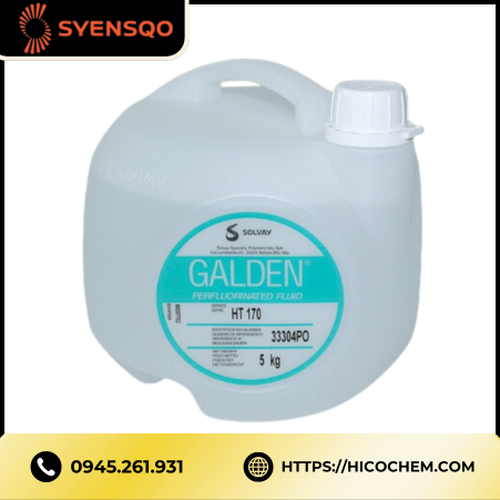
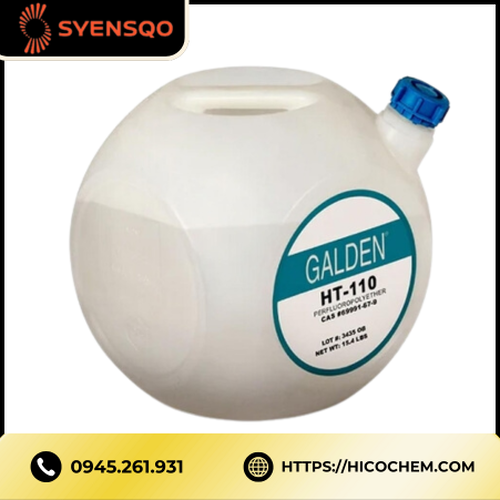
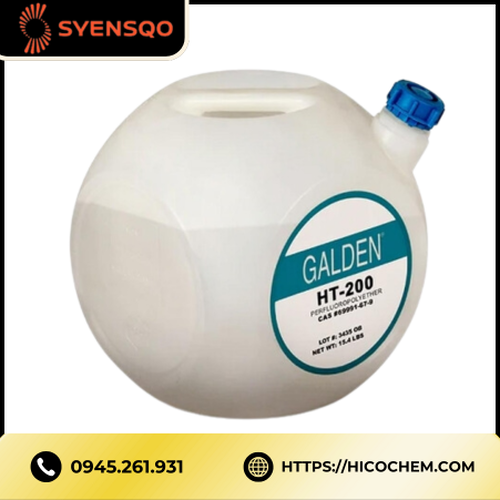
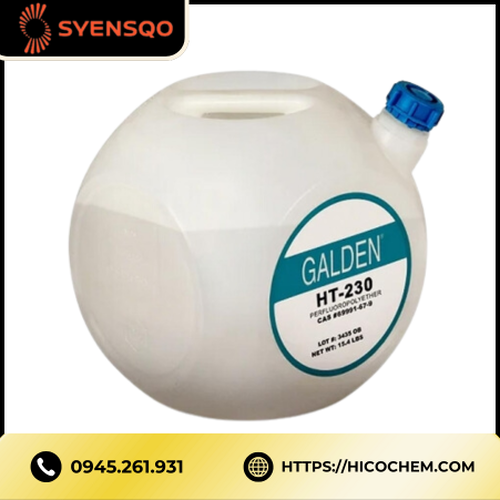
Galden® HT Series Comparison
| Grade | Boiling Point (°C) | Density @ 25°C (g/cm³) | Vapor Pressure @ 25°C (torr) | Viscosity @ 25°C (cSt) | Dielectric Strength | Chemical Stability | Flammability | Residue |
|---|---|---|---|---|---|---|---|---|
| Galden® HT 55 | 55 | 1.65 | 225 | 0.45 | 40 kV | Chemically inert | Non-flammable | No decomposition residue |
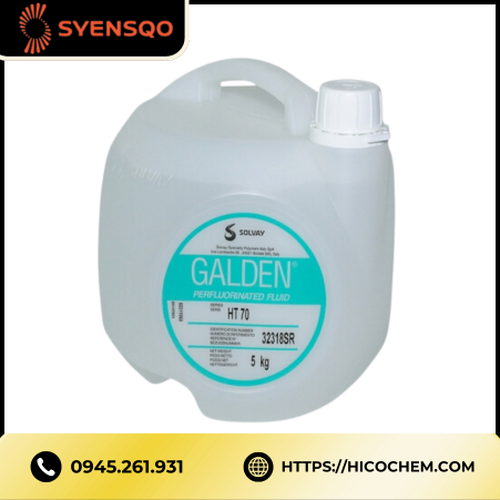
| Galden® HT 70 | 70 | 1.68 | 141 | 0.50 | 40 kV | Chemically inert | Non-flammable | No decomposition residue |
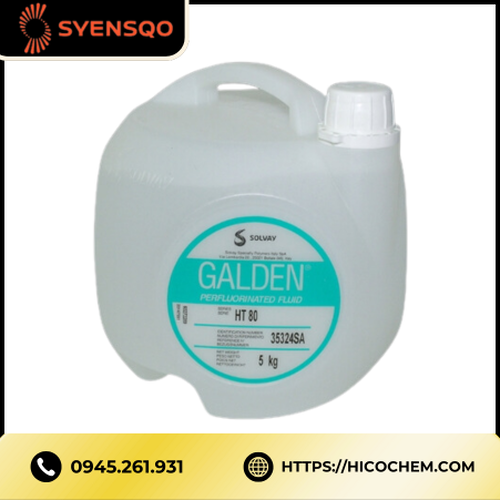
| Galden® HT 80 | 80 | 1.69 | 105 | 0.57 | 40 kV | Chemically inert | Non-flammable | No decomposition residue |
| Galden® HT 110 | 110 | 1.71 | 17 | 0.77 | 40 kV | Chemically inert | Non-flammable | No decomposition residue |
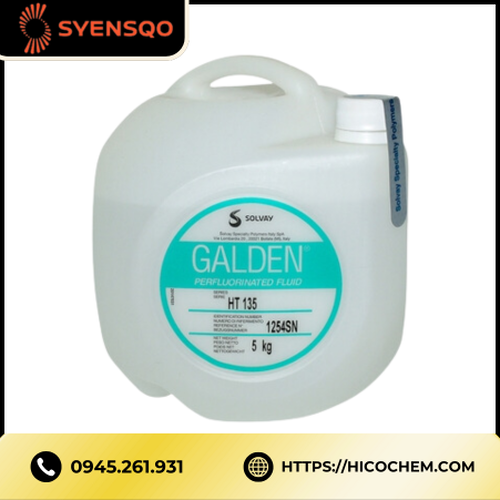
| Galden® HT 135 | 135 | 1.72 | 5.8 | 1.00 | 40 kV | Chemically inert | Non-flammable | No decomposition residue |
| Galden® HT 170 | 170 | 1.77 | 0.8 | 1.80 | 40 kV | Chemically inert | Non-flammable | No decomposition residue |
| Galden® HT 200 | 200 | 1.79 | 0.2 | 2.40 | 40 kV | Chemically inert | Non-flammable | No decomposition residue |
| Galden® HT 230 | 230 | 1.82 | 0.03 | 4.40 | 40 kV | Chemically inert | Non-flammable | No decomposition residue |
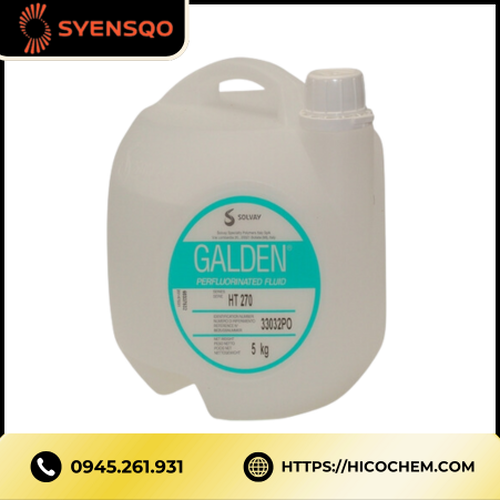
| Galden® HT 270 | 270 | 1.85 | <0.01 | 14.00 | 40 kV | Chemically inert | Non-flammable | No decomposition residue |
Notes: Dielectric strength is approximately 40 kV at a 2.54 mm electrode gap. Galden® HT fluids have no flash point, fire point or auto-ignition point under standard test conditions. Values shown are typical data and should not be considered guaranteed specifications.
Additional Information
|
Property |
Typical Value |
Unit |
|---|---|---|
|
Coefficient of thermal expansion |
0.0011 |
cm³/cm³/°C |
Applications
1. Semiconductor Manufacturing Equipment
Galden® HT 55 can be used in temperature-control systems connected to semiconductor processing equipment, including plasma etching, chemical vapor deposition, physical vapor deposition and ion implantation tools.
Its low viscosity supports efficient circulation through compact cooling channels, while its chemical inertness helps minimize the risk of fluid degradation or contamination. Stable temperature control can improve process consistency, wafer quality and equipment reliability.
2. Recirculating Chillers
One of the most important applications of Galden® HT 55 is as a heat-transfer medium in recirculating chillers used for semiconductor tools, analytical instruments and high-precision manufacturing equipment.
Its extremely low pour point allows the fluid to remain mobile under very low-temperature conditions. This supports reliable cold starts, consistent circulation and accurate temperature regulation across demanding operating cycles.
3. Two-Phase Immersion Cooling
Galden® HT 55 has a defined boiling point of approximately 55°C, making it suitable for properly engineered two-phase immersion cooling systems.
Heat generated by electronic components causes the fluid to boil. The resulting vapor rises, condenses on a cooling surface and returns to the liquid bath. This evaporation-and-condensation cycle enables efficient heat removal while maintaining relatively uniform component temperatures.
4. Server and High-Performance Computing Cooling
Galden® HT 55 may be considered for specialized cooling systems serving servers, processors and high-density computing hardware.
Its dielectric properties help reduce the risk of electrical short circuits, while its low boiling point supports passive heat removal through controlled boiling. It is most relevant to systems specifically designed for two-phase cooling at temperatures compatible with its 55°C boiling point.
FAQ
1. Is Galden® HT 55 electrically conductive?
No. Galden® HT 55 is a dielectric fluid with a typical dielectric strength of approximately 40 kV across a 2.54 mm gap. Its electrical insulation properties support thermal management near sensitive electronic and electrical components.
2. Can Galden® HT 55 be used for immersion cooling?
Yes. Its dielectric properties and defined 55°C boiling point make it suitable for properly designed direct-contact and two-phase immersion cooling systems.
In a two-phase system, the fluid absorbs heat, boils, condenses on a cooled surface and returns to the liquid bath. The system must include appropriate vapor containment, condensation capacity and fluid-recovery controls.
3. Is Galden® HT 55 suitable for semiconductor chillers?
Yes. Galden® HT 55 is particularly suitable for low-temperature recirculating chillers used with semiconductor processing and testing equipment. Its low viscosity supports circulation through compact channels, while its dielectric and chemically inert characteristics reduce electrical and chemical compatibility concerns.
4. Does Galden® HT 55 leave residues?
Under proper operating conditions, Galden® HT fluids do not normally form carbonaceous or decomposition residues. This helps reduce contamination, deposits and the risk of circulating-pump seizure caused by degraded fluid.
5. Is Galden® HT 55 compatible with metals, plastics and elastomers?
Galden® PFPE fluids are compatible with many commonly used metals, plastics and elastomers. However, compatibility can vary according to material formulation, operating temperature and thermal cycling.
Testing should therefore be performed using the actual seals, gaskets, hoses and system components under representative operating conditions.


AAdministratorsQTV
Welcome. Feel free to leave a comment, we will respond soon