
- Client Duong Do dinh - (0986490xxx) bought 11 month ago (25/11/2025)
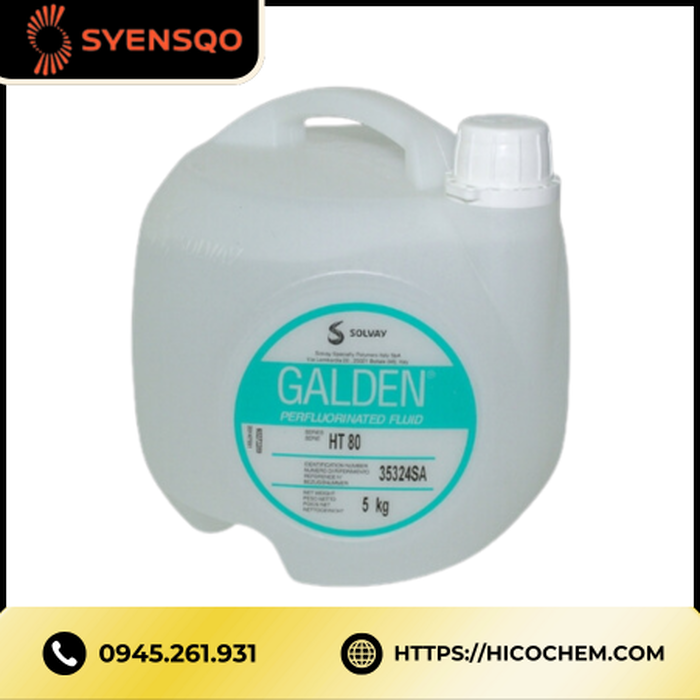
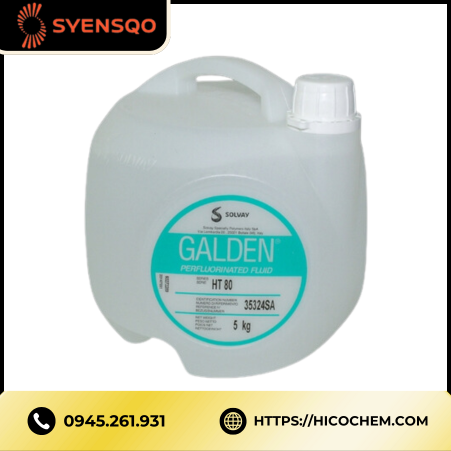
Galden® HT 80
4 5 (1 evaluate)Category: Galden® HT
Maker: Syensqo
Made in: Italy
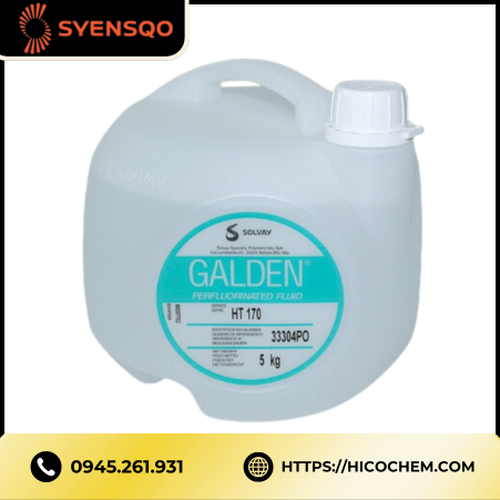
Packaging: 1kg, 5kg
What Is Galden® HT 80?
Galden® HT 80 is a high-performance, inert, and non-flammable perfluoropolyether (PFPE) fluorinated fluid used primarily for heat transfer, electronic testing, and cooling. It features a boiling point of 80 °C and strong electrical insulating properties.
Key Features and Process Benefits
| Feature | Process and Customer Benefit |
|---|---|
| Controlled boiling point of 80°C | Supports predictable temperature control and properly engineered two-phase cooling systems operating near the fluid’s boiling temperature. |
| Very low viscosity: 0.57 cSt at 25°C | Reduces circulation resistance and supports efficient flow through narrow piping, compact channels and heat exchangers. |
| Low pour point of −110°C | Maintains fluidity under severe cold conditions and supports dependable cold starts in low-temperature systems. |
| Lower volatility than HT 55 and HT 70 | Helps reduce evaporation losses while maintaining excellent low-temperature pumpability. |
| Good dielectric performance | Supports thermal management near energized electronics, semiconductor tools and electrically sensitive equipment. |
| High chemical stability | Resists reaction with many acids, alkalis, fuels, oils, detergents and process chemicals. |
| Good thermal stability | Helps maintain predictable fluid behavior through repeated heating and cooling cycles. |
| Non-flammable PFPE chemistry | Has no flash point, fire point or auto-ignition point under standard test conditions, reducing fire risk. |
| Low moisture solubility | Helps preserve fluid purity and electrical-insulation performance in sensitive systems. |
| Compatible with many engineering materials | Provides design flexibility for systems using common metals, plastics and elastomers, subject to component-level testing. |
| Low residue tendency under recommended conditions | Helps reduce deposits, contamination and maintenance associated with degraded conventional thermal fluids. |
| Balanced position in the HT series | Provides lower volatility than HT 70 while circulating more easily than HT 110 and higher-boiling grades. |
Galden® PFPE fluids have a typical dielectric strength of approximately 40 kV across a 2.54 mm gap. They are chemically inert, non-flammable and compatible with many materials commonly used in heat-transfer equipment.
Technical Properties
The following values are typical properties measured at 25°C unless otherwise specified.
| Property | Typical Value | Unit |
|---|---|---|
| Base fluid | PFPE | — |
| Boiling point | 80 | °C |
| Pour point | −110 | °C |
| Average molecular weight | 430 | amu |
| Density at 25°C | 1.69 | g/cm³ |
| Kinematic viscosity at 25°C | 0.57 | cSt |
| Vapor pressure at 25°C | 105 | torr |
| Specific heat | 0.23 | cal/g·°C |
| Thermal conductivity | 0.065 | W/m·K |
| Heat of vaporization at boiling point | 17 | cal/g |
| Surface tension | 16 | dyne/cm |
| Dielectric strength | 40 at 2.54 mm gap | kV |
| Dielectric constant | 1.89 | — |
| Volume resistivity | 1.5 × 10¹⁵ | Ω·cm |
| Dissipation factor at 1 kHz | 2 × 10⁻⁴ | — |
| Water solubility | <10 | ppm by weight |
| Air solubility | 26 | cm³ gas/100 cm³ liquid |
| Coefficient of thermal expansion | 0.0011 | cm³/cm³·°C |
These are typical technical values intended for product comparison and preliminary system design. They should not be treated as guaranteed specifications. The current Technical Data Sheet and Safety Data Sheet should be reviewed before final fluid selection.
Galden® HT Series Comparison
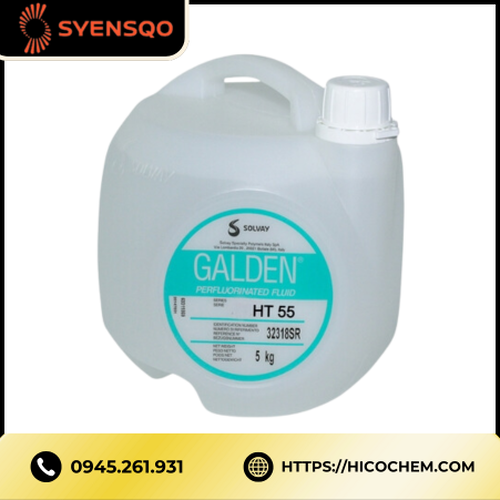
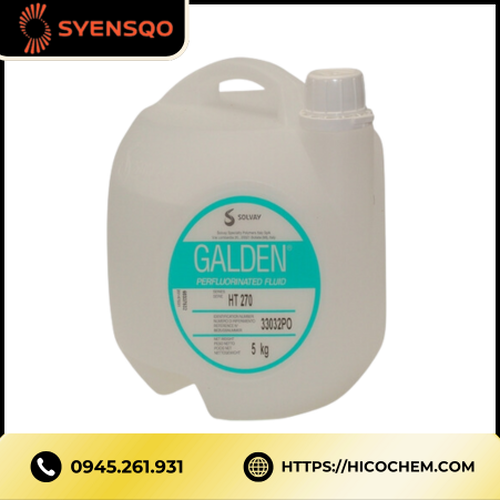
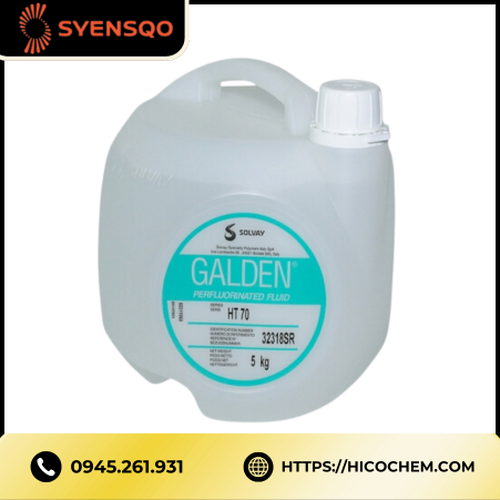
The Galden® HT series includes low- and high-boiling PFPE grades covering boiling points from 55°C to 270°C. Grade selection is primarily based on the required operating-temperature range, viscosity at the minimum temperature and vapor pressure at the maximum temperature.
| Grade | Boiling Point (°C) | Density @ 25°C (g/cm³) | Vapor Pressure @ 25°C (torr) | Viscosity @ 25°C (cSt) | Dielectric Strength | Chemical Stability | Flammability | Residue |
|---|---|---|---|---|---|---|---|---|
| Galden® HT 55 | 55 | 1.65 | 225 | 0.45 | 40 kV | Chemically inert | Non-flammable | No decomposition residue |
| Galden® HT 70 | 70 | 1.68 | 141 | 0.50 | 40 kV | Chemically inert | Non-flammable | No decomposition residue |
| Galden® HT 80 | 80 | 1.69 | 105 | 0.57 | 40 kV | Chemically inert | Non-flammable | No decomposition residue |
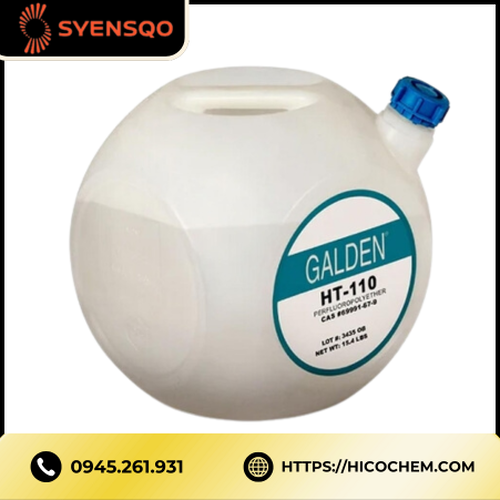
| Galden® HT 110 | 110 | 1.71 | 17 | 0.77 | 40 kV | Chemically inert | Non-flammable | No decomposition residue |
| Galden® HT 135 | 135 | 1.72 | 5.8 | 1.00 | 40 kV | Chemically inert | Non-flammable | No decomposition residue |
| Galden® HT 170 | 170 | 1.77 | 0.8 | 1.80 | 40 kV | Chemically inert | Non-flammable | No decomposition residue |
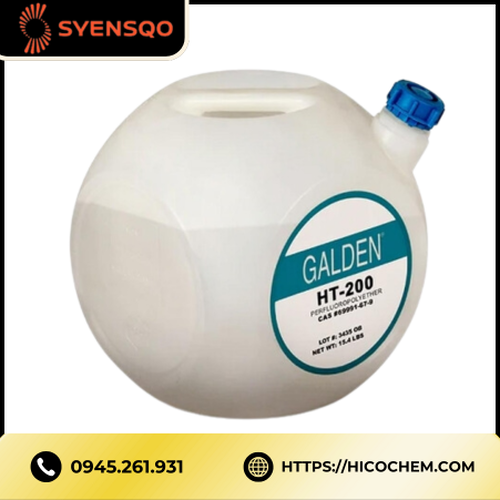
| Galden® HT 200 | 200 | 1.79 | 0.2 | 2.40 | 40 kV | Chemically inert | Non-flammable | No decomposition residue |
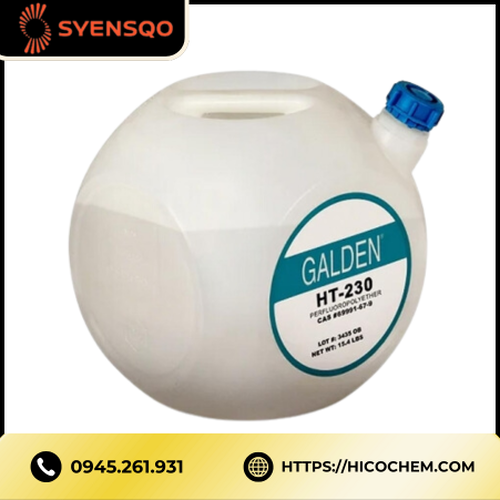
| Galden® HT 230 | 230 | 1.82 | 0.03 | 4.40 | 40 kV | Chemically inert | Non-flammable | No decomposition residue |
| Galden® HT 270 | 270 | 1.85 | <0.01 | 14.00 | 40 kV | Chemically inert | Non-flammable | No decomposition residue |
How Galden® HT 80 Differs from Nearby Grades
Compared with Galden® HT 70: Galden® HT 80 has a 10°C higher boiling point and lower vapor pressure. It can provide better evaporation control, although its viscosity is slightly higher.
Compared with Galden® HT 110: Galden® HT 80 is easier to circulate at low temperatures, while HT 110 provides a much higher boiling margin and substantially lower vapor pressure.
Compared with Galden® HT 55: Galden® HT 80 offers reduced volatility and a higher usable temperature window, while HT 55 provides the lowest viscosity and lowest boiling point in the series.
For an unpressurized single-phase system, Syensqo generally recommends selecting a fluid whose boiling point is at least 10°C above the maximum operating temperature. Based on this guideline, HT 80 would normally be considered for maximum bulk-fluid temperatures of approximately 70°C or below. The practical lower limit is determined by viscosity, pump capability and system pressure drop rather than by pour point alone.
Common Applications
1. Semiconductor Process Chillers
Galden® HT 80 can be used in temperature-control units serving semiconductor dry-etching, chemical vapor deposition, physical vapor deposition and other wafer-processing equipment.
Its very low viscosity supports circulation through compact cooling passages, while its dielectric and chemically inert properties are valuable around sensitive electronics and aggressive process environments.
2. Low-Temperature Recirculating Chillers
HT 80 is particularly relevant to recirculating chillers used with analytical instruments, electronic-manufacturing equipment and precision industrial machinery.
Its −110°C pour point and low viscosity support cold-temperature circulation, although actual pumpability must be assessed at the system’s minimum operating temperature.
3. Electronic and Server Cooling Systems
Galden® HT fluids are used in electronic thermal-exchange systems and server cooling where a non-conductive fluid is required.
HT 80 may be selected for indirect or direct-contact cooling systems whose operating-temperature profile is compatible with its 80°C boiling point. System designers must evaluate vapor containment, electrical clearances, materials and heat-exchanger capacity.
4. Single-Phase Immersion Cooling
In a single-phase immersion-cooling system, compatible electronic components are immersed in the dielectric fluid while the liquid remains below its boiling point and is circulated through a heat exchanger.
HT 80 provides a higher boiling margin than HT 55 and HT 70, while retaining low viscosity for circulation through pumps and cooling loops.
5. Two-Phase Thermal Management
Galden® HT 80 may also be used in properly engineered two-phase systems designed around its nominal 80°C boiling point.
Heat causes the liquid to boil at the component surface. The vapor then rises, condenses on a cooled surface and returns to the liquid reservoir. The system requires effective vapor containment, condensation capacity and fluid recovery.
6. Transformer and Power-Electronics Cooling
HT 80 can support heat removal near transformers, converters, power supplies and electrically energized assemblies.
Its dielectric properties and non-flammable behavior provide advantages where conductive water-based coolants or combustible hydrocarbon fluids would introduce additional risks.
7. Fuel-Cell Manufacturing and Testing
Syensqo identifies Galden® HT fluids as dielectric heat-transfer media for fuel-cell manufacturing and testing because of their thermal stability, chemical inertness and absence of flash and fire points.
HT 80 is appropriate only when its boiling point, viscosity and operating-temperature range match the specific equipment design.
8. Specialized Chemical and Pharmaceutical Thermal Systems
Galden® HT 80 may be used in closed thermal-control circuits connected to reactors, laboratory equipment and specialized chemical or pharmaceutical processes.
Its inert PFPE chemistry can help limit unwanted reactions between the thermal fluid, construction materials and surrounding process chemicals. The suitability of HT 80 must be confirmed against actual operating temperatures and regulatory requirements.
Frequently Asked Questions About Galden® HT 80
1. What is Galden® HT 80 mainly used for?
Galden® HT 80 is mainly used as a dielectric heat-transfer fluid in semiconductor chillers, recirculating temperature-control units, electronic cooling systems, server thermal management, transformers and specialized industrial equipment.
2. What is the boiling point of Galden® HT 80?
Galden® HT 80 has a nominal boiling point of 80°C at atmospheric pressure. This defined boiling point can support predictable single-phase temperature control and properly designed two-phase cooling.
3. What is the recommended maximum operating temperature?
For an unpressurized single-phase system, the general upper guideline is approximately 70°C, or 10°C below the fluid’s nominal boiling point.
The actual allowable temperature depends on system pressure, vapor containment, pump inlet conditions and equipment design.
4. Should Galden® HT 80 be used in an open or closed system?
A closed or well-contained circuit is generally preferred because HT 80 has a relatively high vapor pressure at ambient temperature.
Proper sealing, expansion volume, condenser design and fluid-recovery measures can reduce evaporation loss and prevent external contamination.
5. How should a pump be selected for Galden® HT 80?
Pump selection should consider the fluid viscosity at the minimum operating temperature, required flow rate, fluid density, system pressure drop and vapor pressure at the pump inlet.
Syensqo uses approximately 20 cP, equivalent to around 11–12 cSt, as a general pumpability limit for many commercial heat-transfer pumps.



AAdministratorsQTV
Welcome. Feel free to leave a comment, we will respond soon