

- Client Duong Do dinh - (0986490xxx) bought 8 month ago (25/11/2025)
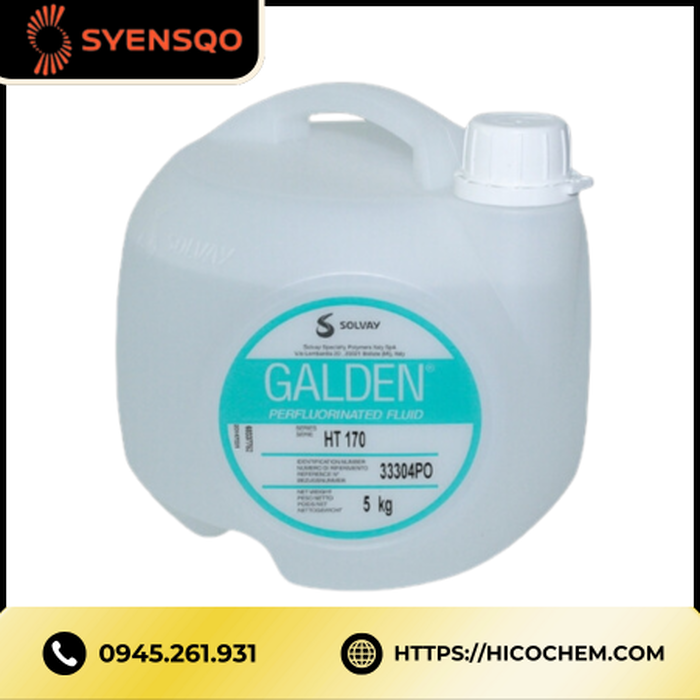
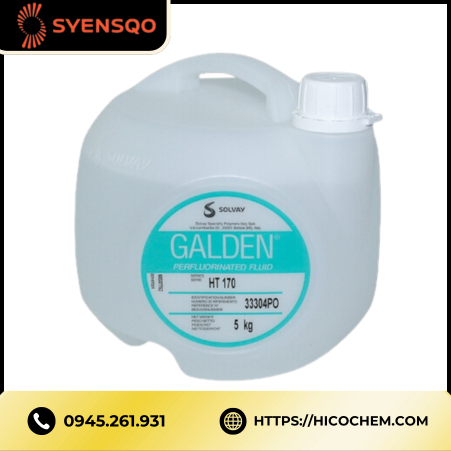
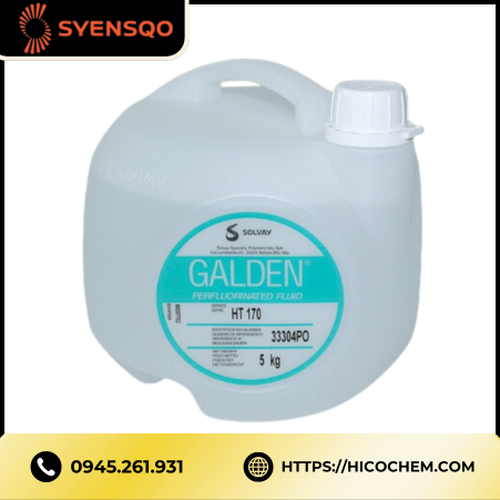
Galden HT 170
4 5 (1 evaluate)Category: Galden® HT
Maker: Syensqo
Made in: Italy
Packaging: 1kg, 5kg
Shipping: We provide door-to-door worldwide shipping services using UPS or FedEx
What is Galden HT 170?
Galden HT 170 is perfectly suited as a heat transfer fluid thanks to its remarkable thermal and chemical stability, excellent compatibility with metals, polymers, and elastomers, and strong dielectric properties. Galden HT 170 offers a high level of safety, being non-explosive, non-toxic, and resistant to ignition.
Key Features of Galden® HT 170
Galden® HT 170 is an inert, dielectric perfluoropolyether (PFPE) heat-transfer fluid developed for elevated-temperature thermal-management systems. With a nominal boiling point of 170°C, it is the first high-boiling grade in the standard Galden® HT series.
| Feature | Customer Benefit |
|---|---|
| High boiling point of 170°C | Supports elevated-temperature heat-transfer processes and provides a higher boiling margin than Galden® HT 135 and lower-boiling grades. |
| Low volatility | Helps reduce evaporation losses and fluid consumption compared with lower-boiling Galden® HT fluids. |
| Good circulation performance | Offers easier pumping and lower flow resistance than higher-boiling grades such as HT 200, HT 230 and HT 270. |
| Excellent thermal stability | Maintains reliable fluid performance during demanding thermal cycles and extended high-temperature operation. |
| Chemically inert PFPE composition | Resists reactions with many aggressive process chemicals, helping preserve fluid integrity and protect equipment. |
| Excellent dielectric properties | Provides electrical insulation for thermal management near semiconductor equipment, transformers and sensitive electronic components. |
| Non-flammable | Has no flash point, fire point or auto-ignition point, helping reduce fire hazards associated with combustible heat-transfer fluids. |
| Negligible decomposition under recommended conditions | Helps minimize deposits, contamination and residue-related maintenance within properly controlled systems. |
| Non-corrosive performance | Helps protect metals and circulation-system components when moisture and operating temperatures are properly controlled. |
| Broad material compatibility | Compatible with many metals, plastics and elastomers, subject to testing with the actual seals, hoses and gaskets used in the system. |
| Balanced high-boiling performance | Combines lower volatility than HT 135 with better low-temperature pumpability than HT 200–HT 270. |
| Suitable for demanding industrial systems | Supports semiconductor processing, recirculating thermal-control units, chemical and pharmaceutical equipment, transformers and specialized high-temperature systems. |
Galden® HT 170 is particularly suitable when an application requires a high-boiling, electrically insulating and non-flammable heat-transfer fluid, but does not require the maximum temperature capability or higher viscosity of HT 230 or HT 270. Syensqo identifies semiconductor manufacturing, chemical and pharmaceutical processing, transformers, supercomputer cooling and recirculating chillers among the broader Galden® HT application areas.
Technical data sheet of Galden HT 170
Physical
|
Property |
Typical Value |
Unit |
|---|---|---|
|
Average Molecular Weight |
760 |
amu |
|
Density |
1.77 |
g/cm³ |
|
Kinematic Viscosity |
1.80 |
cSt |
|
Solubility |
|
|
|
of air |
26.0 |
ml gas/100 ml liquid |
|
of water |
< 10.0 |
wppm |
|
Surface Tension |
18 |
dyne/cm |
|
Vapor Pressure |
0.8 |
torr |
Thermal
|
Property |
Typical Value |
Unit |
|---|---|---|
|
Boiling Point |
170 |
°C |
|
Heat of Vaporization - at Boiling Point |
16.0 |
cal/g |
|
Pour Point |
-97 |
°C |
|
Specific Heat Capacity (25°C) |
0.23 |
cal/g/°C |
Electrical
|
Property |
Typical Value |
Unit |
|---|---|---|
|
Dielectric Constant |
1.94 |
|
|
Dielectric Strength - 2.54mm gap |
40 |
kV |
|
Dissipation Factor - 1 kHz |
2.0E-4 |
|
|
Volume Resistance |
1.5x10E15 |
ohms-cm |
Optical
|
Property |
Typical Value |
Unit |
Test Method |
|---|---|---|---|
|
Refractive Index |
1.28 |
|
ASTM D542 |
Galden® HT Series Comparison
| Grade | Boiling Point (°C) | Density @ 25°C (g/cm³) | Vapor Pressure @ 25°C (torr) | Viscosity @ 25°C (cSt) | Dielectric Strength | Chemical Stability | Flammability | Residue |
|---|---|---|---|---|---|---|---|---|
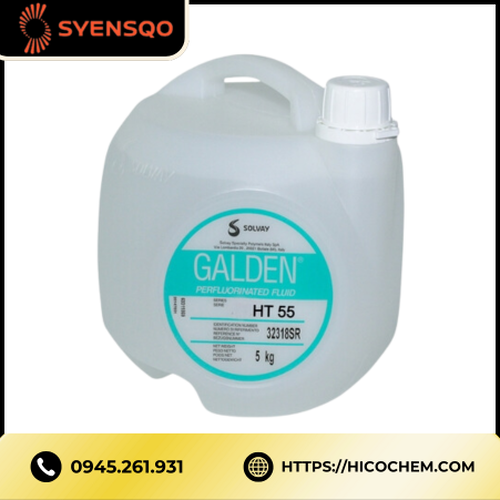
| Galden® HT 55 | 55 | 1.65 | 225 | 0.45 | 40 kV | Chemically inert | Non-flammable | No decomposition residue |
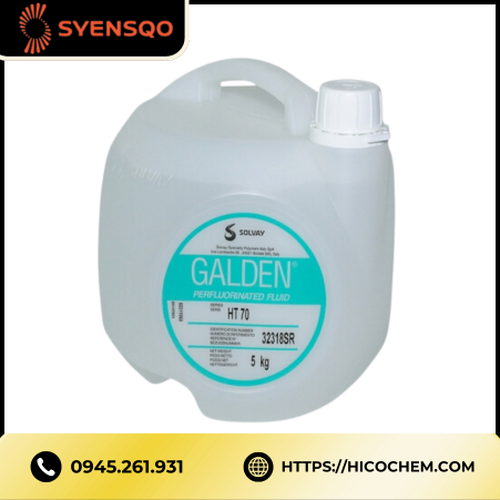
| Galden® HT 70 | 70 | 1.68 | 141 | 0.50 | 40 kV | Chemically inert | Non-flammable | No decomposition residue |
| Galden® HT 80 | 80 | 1.69 | 105 | 0.57 | 40 kV | Chemically inert | Non-flammable | No decomposition residue |
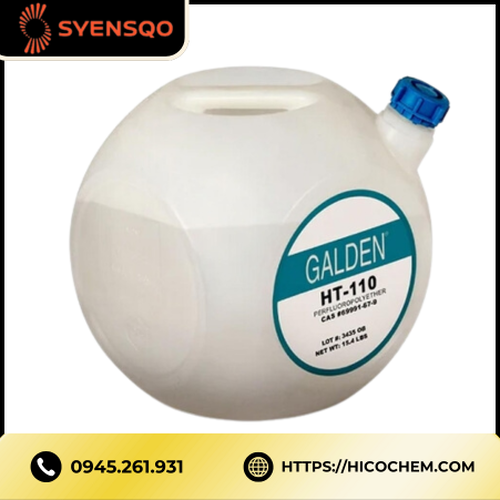
| Galden® HT 110 | 110 | 1.71 | 17 | 0.77 | 40 kV | Chemically inert | Non-flammable | No decomposition residue |
| Galden® HT 135 | 135 | 1.72 | 5.8 | 1.00 | 40 kV | Chemically inert | Non-flammable | No decomposition residue |
| Galden® HT 170 | 170 | 1.77 | 0.8 | 1.80 | 40 kV | Chemically inert | Non-flammable | No decomposition residue |
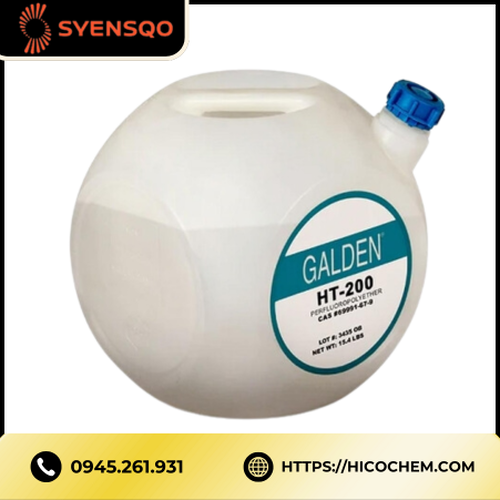
| Galden® HT 200 | 200 | 1.79 | 0.2 | 2.40 | 40 kV | Chemically inert | Non-flammable | No decomposition residue |
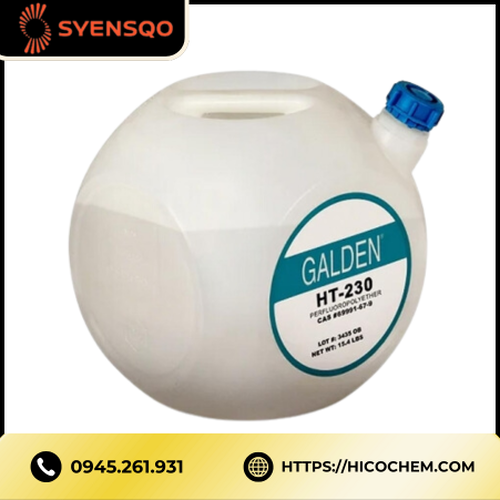
| Galden® HT 230 | 230 | 1.82 | 0.03 | 4.40 | 40 kV | Chemically inert | Non-flammable | No decomposition residue |
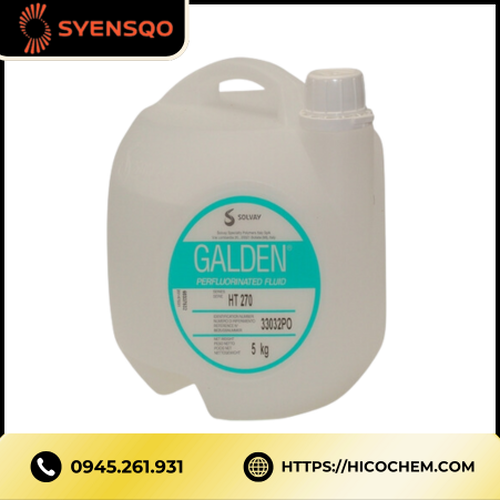
| Galden® HT 270 | 270 | 1.85 | <0.01 | 14.00 | 40 kV | Chemically inert | Non-flammable | No decomposition residue |
Notes: Dielectric strength is approximately 40 kV at a 2.54 mm electrode gap. Galden® HT fluids have no flash point, fire point or auto-ignition point under standard test conditions. Values shown are typical data and should not be considered guaranteed specifications.
Additional Information
|
Property |
Typical Value |
Unit |
|---|---|---|
|
Thermal Conductivity |
0.065 |
W/m°C |
|
Coefficient of Expansion |
0.0011 |
cm³/cm³.°C |
Applications of Galden® HT 170
Galden® HT 170 is a high-boiling PFPE heat-transfer fluid designed for elevated-temperature systems requiring low volatility, chemical inertness, electrical insulation and non-flammability. It is the entry-level high-boiling grade within the standard Galden® HT series.
1. Semiconductor Dry-Etching Chillers
Galden® HT 170 can be used in temperature-control units connected to semiconductor dry-etching equipment. Its chemical inertness and dielectric behavior make it suitable for thermal circuits operating near sensitive electronics and aggressive process gases.
Its higher boiling point also helps reduce evaporation and circuit-pressure problems compared with lower-boiling Galden® HT grades. Galden® HT fluids are widely used in dry etching, CVD and PVD semiconductor processes.
2. CVD and PVD Process Equipment
Chemical vapor deposition and physical vapor deposition processes require accurate and repeatable temperature control to maintain coating uniformity and process stability.
Galden® HT 170 can serve as a circulating thermal fluid in compatible heating and cooling systems where elevated-temperature capability, low volatility and resistance to aggressive process environments are required.
3. High-Temperature Recirculating Chillers
HT 170 is suitable for industrial chillers and temperature-control units operating above the practical temperature range of HT 110 or HT 135.
As the first high-boiling grade in the HT series, it provides lower evaporation losses than the low-boiling grades while remaining easier to pump than HT 200, HT 230 and HT 270. Syensqo identifies recirculating chillers as a principal application for the Galden® HT family.
4. Transformer and Power-Electronics Cooling
Galden® HT 170 can provide both electrical insulation and heat removal in compatible transformers, power converters, inverters and other energized equipment.
Galden® PFPE fluids have a typical dielectric strength of approximately 40 kV across a 2.54 mm gap and have no flash, fire or auto-ignition points.
5. Fuel-Cell Manufacturing and Test Equipment
Galden® HT fluids can be used as dielectric heat-transfer media in fuel-cell manufacturing and testing systems.
Their chemical inertness, thermal stability and non-flammability make them useful where electrical insulation and controlled heat removal are required. HT 170 should be selected only when its operating-temperature profile matches the equipment design.
Certificate of Analysis (COA) for Galden HT 170
_pdf(4).png)
Frequently Asked Questions About Galden® HT 170
1. What is Galden® HT 170 mainly used for?
Galden® HT 170 is primarily used in elevated-temperature heat-transfer systems such as semiconductor process chillers, temperature-control units, chemical reactors, pharmaceutical equipment, transformers and power-electronic cooling circuits.
It is generally selected when HT 135 does not provide sufficient boiling margin, but the higher viscosity and temperature capability of HT 200 or HT 230 are not required.
2. What is the recommended maximum operating temperature of Galden® HT 170?
Galden® HT 170 has a nominal boiling point of 170°C. For an unpressurized single-phase system, the fluid boiling point should generally be at least 10°C above the maximum operating temperature.
This gives an approximate upper guideline of 160°C. Actual limits depend on system pressure, flow rate, vapor containment and equipment design.
3. What type of pump should be used with Galden® HT 170?
Pump selection should be based on viscosity at the minimum operating temperature, required flow rate, system pressure drop and fluid density.
Syensqo uses approximately 20 cP, equivalent to around 11–12 cSt, as a general pumpability limit for many commercial pumps. The pump manufacturer should confirm compatibility with the selected fluid and system temperature.
4. Does Galden® HT 170 require corrosion inhibitors?
Galden® PFPE fluids are chemically inert and do not normally require the oxidation inhibitors commonly used in hydrocarbon heat-transfer oils.
However, system cleanliness and moisture control remain important. Any separate water phase or contamination should be investigated because it can affect materials and system reliability.
5. How often should Galden® HT 170 be replaced?
There is no universal fixed replacement interval. Fluid condition depends on operating temperature, contamination, leakage, system cleanliness and exposure to excessive heater-surface temperatures.
Periodic checks may include appearance, contamination, boiling behavior, viscosity and fluid quantity. Properly controlled Galden® PFPE systems are described as requiring very little maintenance.


AAdministratorsQTV
Welcome. Feel free to leave a comment, we will respond soon