
- Client Duong Do dinh - (0986490xxx) bought 10 month ago (25/11/2025)
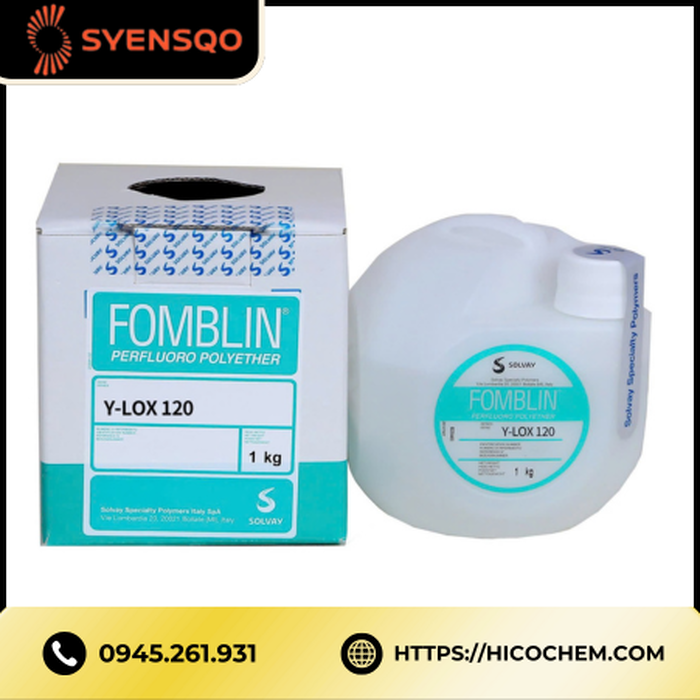
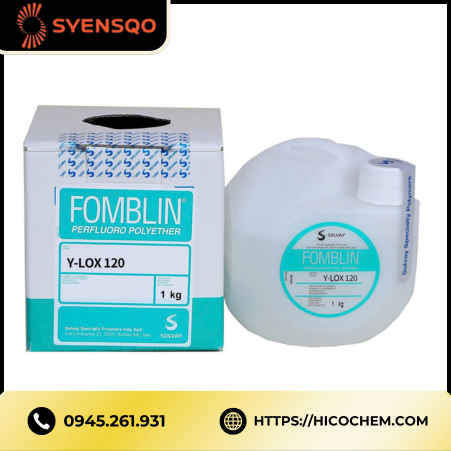
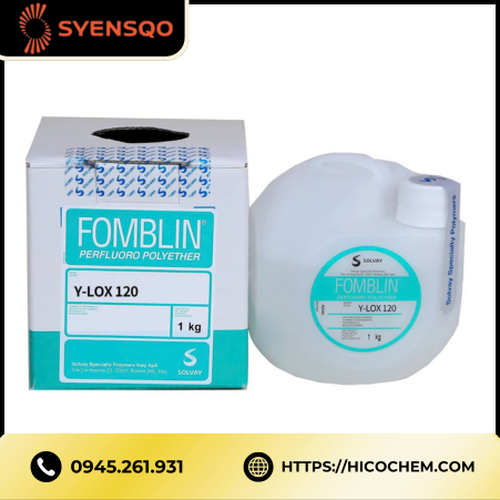
Fomblin® Y LOX 120
4 5 (1 evaluate)Category: Fomblin® Y
Maker: Syensqo
Made in: Italy
Packaging: 1kg, 5kg
What Is Fomblin® Y LOX 120?
Fomblin® Y LOX 120 is a specialty perfluoropolyether lubricant developed for oxygen-handling, liquid-compressor, vacuum and demanding mechanical applications where conventional hydrocarbon oils may create unacceptable risks related to oxidation, flammability, chemical attack or evaporation.
Key Features and Process Benefits
| Key feature | Technical function | Process and customer benefit |
|---|---|---|
| Specialty PFPE chemistry | Resists oxidation and chemical degradation more effectively than conventional hydrocarbon oils | Supports reliable lubrication in oxygen-rich, reactive and chemically aggressive environments |
| Designed for oxygen handling | Fomblin® LOX fluids are tailored for oxygen applications requiring low vapor pressure | Helps reduce lubricant-related compatibility and ignition concerns in properly designed oxygen systems |
| Low vapor pressure | Typical vapor pressure is 2 × 10⁻⁴ torr at 20°C | Limits lubricant evaporation and contamination in vacuum and reduced-pressure applications |
| Non-flammable behavior | Fomblin® PFPE fluids have no flash point, fire point or autoignition point | Improves process safety where conventional oils may present a combustion risk |
| Outstanding chemical stability | Remains stable in contact with many acids, alkalis, solvents, halogens and reactive gases | Reduces the likelihood of lubricant breakdown, sludge formation and process contamination |
| Good thermal stability | Resists oxidation and degradation when exposed to elevated operating temperatures | Supports longer lubricant life and more stable equipment performance |
| Viscosity index of 120 | Limits the rate of viscosity change as operating temperature varies | Provides more consistent film formation across changing process temperatures |
| Pour point of −46°C | Maintains laboratory-tested flow capability at relatively low temperatures | Supports start-up and operation in equipment exposed to low-temperature conditions |
| Low surface tension | Spreads efficiently over metal and precision mechanical surfaces | Helps create uniform lubricant coverage using a controlled quantity of oil |
| Dielectric properties | PFPE fluids provide low dielectric constant and high electrical resistivity | Suitable for selected electrical, electronic and electromechanical mechanisms |
| Broad material compatibility | Compatible with many metals, glass, ceramics, plastics and elastomers | Simplifies use in assemblies containing multiple construction materials |
| High specific gravity | Density is approximately 1.89 g/cm³ | Allows a compact volume of lubricant, although filling quantities must be calculated carefully by mass |
Technical Properties for Fomblin® Y LOX 120
| Property | Typical value | Unit | Test method |
|---|---|---|---|
| Base fluid | PFPE | — | — |
| Appearance | Clear and colorless | — | — |
| Physical form | Liquid | — | — |
| Specific gravity at 20°C | 1.89 | g/cm³ | — |
| Kinematic viscosity at 20°C | 120 | cSt | ASTM D445 |
| Kinematic viscosity at 40°C | 42 | cSt | ASTM D445 |
| Kinematic viscosity at 100°C | 6.8 | cSt | ASTM D445 |
| Viscosity index | 120 | — | ASTM D2270 |
| Pour point | −46 | °C | ASTM D97 |
| Surface tension at 20–25°C | 21 | dyne/cm | — |
| Vapor pressure at 20°C | 2 × 10⁻⁴ | torr | — |
| Vapor pressure at 100°C | 5 × 10⁻² | torr | — |
| Weight loss at 120°C after 22 hours | <10 | wt.% | ASTM D2595 |
Fomblin® Y Series Comparison
Fomblin® Y LOX 120 is based on Fomblin® Y-type PFPE chemistry but is positioned as a specialty oxygen-handling and low-vapor-pressure grade. The table below compares it with commonly selected general-purpose Fomblin® Y oils.
| Product grade | Viscosity at 20°C | Viscosity at 40°C | Viscosity at 100°C | Viscosity index | Pour point | General selection profile |
|---|---|---|---|---|---|---|
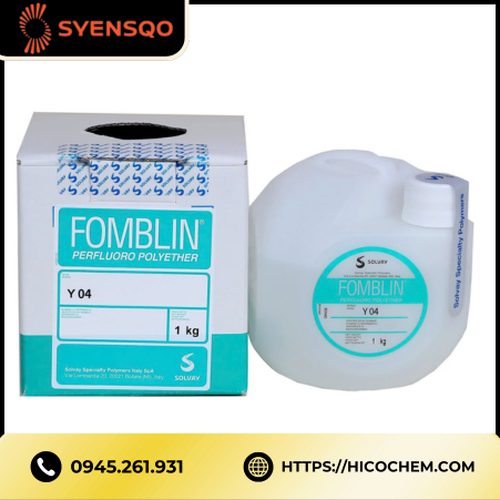
| Fomblin® Y 04 | 38 cSt | 15 cSt | 3.2 cSt | 60 | −58°C | Very low viscosity for light loads, high speeds and small clearances |
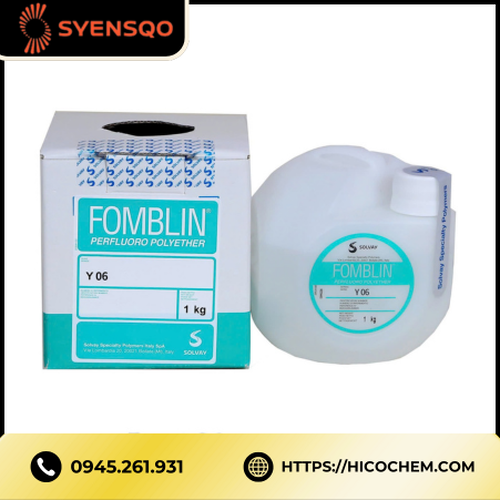
| Fomblin® Y 06 | 60 cSt | 22 cSt | 4.1 cSt | 73 | −50°C | Low-viscosity lubrication for fast-moving precision mechanisms |
| Fomblin® Y LOX 120 | 120 cSt | 42 cSt | 6.8 cSt | 120 | −46°C | Specialty low-vapor-pressure grade for oxygen handling, liquid compressors and vacuum-related applications |
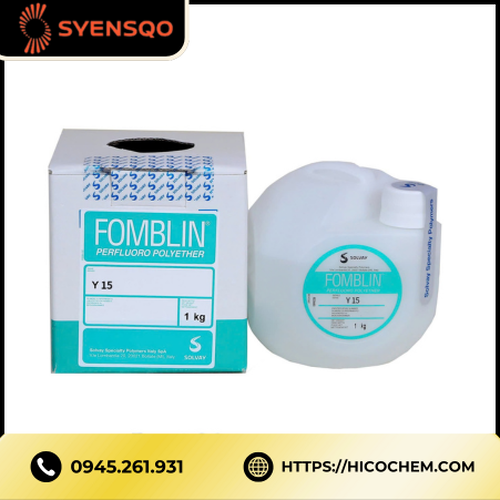
| Fomblin® Y 15 | 156 cSt | 56 cSt | 7.7 cSt | 100 | −45°C | Medium-low viscosity for general mechanical and precision lubrication |
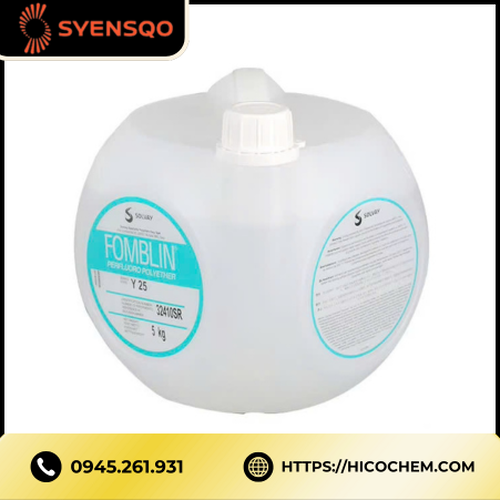
| Fomblin® Y 25 | 250 cSt | 80 cSt | 10 cSt | 108 | −35°C | Medium-viscosity grade offering greater lubricant-film thickness |
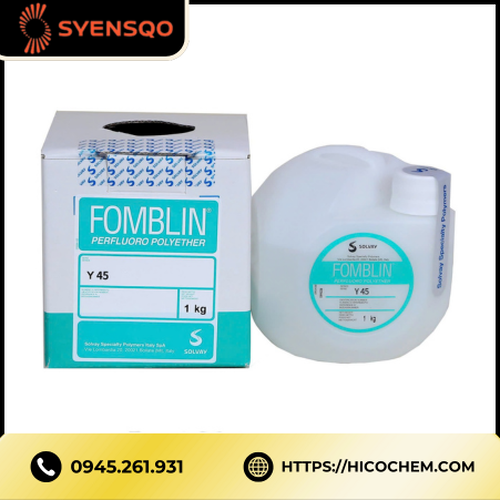
| Fomblin® Y 45 | 470 cSt | 147 cSt | 16 cSt | 117 | −30°C | Higher-viscosity grade for lower-speed or more heavily loaded components |
Common Applications
Oxygen-Handling Systems
Fomblin® LOX grades are specialty fluids developed for handling oxygen when low vapor pressure is required. Fomblin® Y LOX 120 may therefore be considered for properly engineered oxygen-handling equipment, including selected valves, regulators, pumps, compressor mechanisms and auxiliary components.
Oxygen compatibility must always be assessed at the system level. The lubricant does not by itself make equipment safe for oxygen service. Component cleanliness, pressure, temperature, oxygen concentration, flow velocity, impact conditions and construction materials must all comply with the applicable oxygen-system requirements.
Liquid Compressors
The manufacturer specifically identifies Fomblin® Y LOX 120 as a lubricant for liquid-compressor applications. Its chemical stability, thermal stability and lubrication properties make it suitable for mechanical parts operating in harsh environments where conventional oils could oxidize or react with the process fluid.
Potential lubrication points include bearings, mechanical drives, seals and other moving components, subject to compressor-manufacturer approval.
Vacuum Applications
With a typical vapor pressure of 2 × 10⁻⁴ torr at 20°C, Fomblin® Y LOX 120 can be used in selected vacuum-related applications where evaporation control and chemical inertness are required. The product is specifically identified for vacuum applications in the oxygen-service technical bulletin.
For rotary-vane pumps, Roots pumps, turbomolecular pumps or diffusion pumps, Y LOX 120 should not automatically replace a dedicated Fomblin® Y LVAC or HVAC fluid. Dedicated vacuum-pump grades are manufactured with controlled viscosity, molecular-weight distribution and vapor-pressure characteristics for particular pump technologies.
Chemical and Reactive-Gas Equipment
Fomblin® PFPE fluids resist many acids, alkalis, halogens, oxidizing substances and aggressive gases. Y LOX 120 may therefore be considered for valves, instruments, compressor components and mechanical equipment exposed to reactive process media.
Compatibility must still be verified for the exact chemical concentration, temperature, exposure duration and construction material.
High-Performance Mechanical Lubrication
The product’s technical bulletin identifies Fomblin® Y LOX 120 as a base-oil lubricant for high-performance mechanical applications under harsh environmental conditions. Possible uses include precision mechanisms, bearings, sliding surfaces and sealed assemblies where chemical resistance, non-flammability and low volatility are required.
Electrical and Electromechanical Components
The Syensqo product profile lists dielectric properties, low moisture absorption and chemical resistance among the product functions of Fomblin® Y LOX 120. It can therefore be evaluated for selected instruments, actuators and electromechanical assemblies operating near reactive gases or oxygen-service systems.
Frequently Asked Questions
What is Fomblin® Y LOX 120 used for?
It is used in oxygen-handling systems, liquid compressors, vacuum equipment and chemically aggressive environments.
Can Fomblin® Y LOX 120 replace mineral or synthetic oil directly?
No. Existing oil and contamination should be completely removed before changing to a PFPE lubricant.
Is Fomblin® Y LOX 120 compatible with seals and elastomers?
Fomblin® Y LOX 120 is compatible with many common materials, but the specific seal compound should be tested under actual operating conditions.
How should the correct Fomblin® grade be selected?
Selection should be based on viscosity, temperature, pressure, oxygen concentration, vacuum level, speed, load and equipment design.

AAdministratorsQTV
Welcome. Feel free to leave a comment, we will respond soon