
News
03
Dec
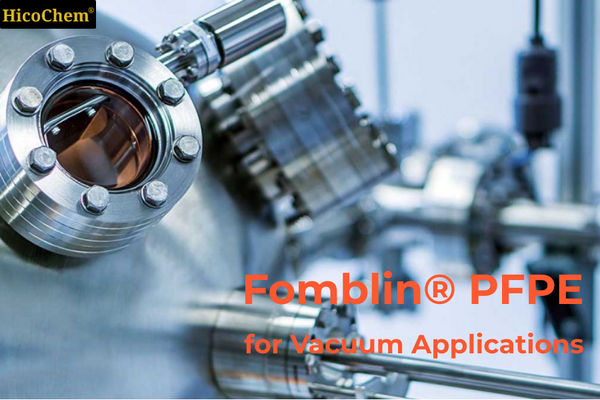
Fomblin® PFPE Lubricants for Vacuum Applications - Reliable Solutions for Extreme Conditions
Fomblin® Y grades are fully fluorinated polyether inert fluids designed for lubrication in vacuum pump systems. Fomblin® PFPE fluids consist of a blend of fluorinated polymers produced through a photochemical process starting hexafluoropropylene.

03
Dec
Fomblin® PFPE for Oxygen Service: High-Performance Lubricants for Oxygen-Rich Environments
Fomblin® PFPE for Oxygen Service: High-Performance Lubricants for Oxygen-Rich Environments, achieving outstanding technical performance, economic efficiency, and significantly improved safety conditions
18
Aug
What is MIL-PRF-7870?
MIL-PRF-7870 is a U.S. military performance specification for general-purpose, low-temperature lubricants, identified by the NATO code O-142.

15
Aug
MIL-PRF-81309H Standard
MIL-PRF-81309H is the most recent (revision H) performance specification for ultra-thin, film-forming compounds that repel water and resist corrosion.

14
Aug
MIL-STD-1330D standard
MIL-STD-1330D is a U.S. military standard that outlines the approved cleaning and purification procedures for oxygen, helium, helium–oxygen mixtures, nitrogen, and hydrogen systems used aboard naval ships and submarines.
14
Aug
MIL-PRF-85570 Standard
MIL-PRF-85570 is a U.S. Department of Defense performance specification that defines the requirements for cleaning agents used on aircraft surfaces.

14
Aug
MIL-C-25769G standard
MIL-C-25769G is a technical specification issued by the United States Department of Defense that defines the performance and quality requirements for corrosion-resistant compounds.

14
Aug
MIL-C-23411 Military Specification
MIL-C-23411 is a United States military specification that outlines the performance and technical requirements for transparent, thin-film corrosion-inhibiting compounds.

17
Jul
What is Solder Wire? A practical step-by-step guide for effective use
Soldering, often confused with welding, is a well-established technique used to join metal components.
20
Oct
Consectetur adipisicing elit, sed do eiusmod tempor incididunt
The release of volatile organic compounds (VOCs) is an ongoing hazard in LPG filling and filling systems. This could be the result of a normal filling process or other accidental problems in the transport of steel cylinders. It is clear that emissions are an unavoidable hazard in the environment and the operator manages the potential consequences as a daily routine.