
News
10
Feb
Advanced Applications of Fomblin® PFPE Lubricants
Fomblin® PFPE provides a high-performance lubrication solution tailored to the demanding requirements of modern automotive applications.

05
Feb
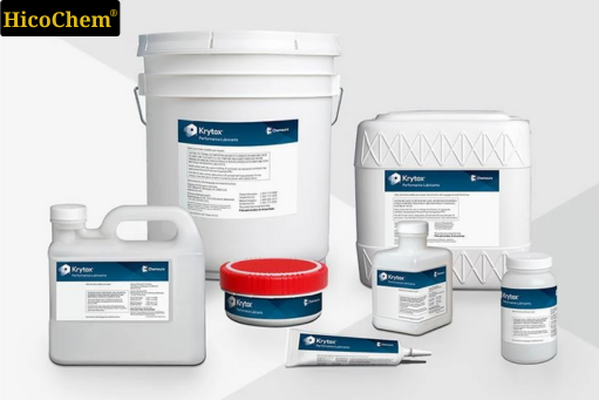
Krytox™ High-Performance Lubricants for Oxygen Applications
Krytox™ lubricants are available in multiple oil and grease grades to meet the demanding lubrication needs of oxygen handling and compressed gas systems. Their stability and performance make them especially suitable for harsh and critical operating environments.
30
Jan
Krytox™ High-Performance Lubricants for Gearbox Systems
Krytox™ greases provide consistently reliable lubrication across a wide temperature range and remain fully stable at continuous operating temperatures up to 350 °C (662 °F).
28
Jan
Halar® ECTFE – Advanced Fluoropolymer for Extreme Performance
Halar® ECTFE is extensively used in anti-corrosion solutions, including protective coatings, linings, and self-supporting piping systems, as well as architectural films.
23
Jan
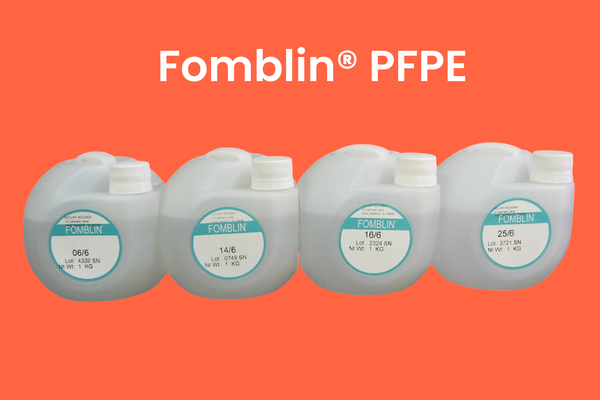
Fomblin® PFPE – High-Performance Lubricants
Fomblin® PFPE lubricants are high-performance perfluoropolyether-based fluids engineered to deliver exceptional reliability in the most demanding operating environments.
20
Jan
Galden® PFPE – Heat Transfer Fluids
Galden® PFPE is a family of advanced fully fluorinated fluids specifically developed for use in high-demand industrial environments.

11
Jan
Galden® SV PFPE Solvents: CFC-Free Cleaning Solutions for Safer and Sustainable Operations
Galden® SV PFPE Solvents are a range of fully fluorinated, CFC-free cleaning fluids specifically designed to deliver safe, effective, and environmentally responsible cleaning performance in electronic and semiconductor applications.

26
Dec
Galden® HT PFPE Heat Transfer Fluids for High-Temperature Industrial Applications
Galden® HT PFPEs are inert, dielectric and high-performance heat transfer fluids with boiling points ranging 55°C to 270°C, suitable for use as Heat Transfer (HT) media for demanding conditions in a variety of fields and applications.
24
Dec
Galden® PFPE Testing Electronic Fluids: Reliable Performance for Semiconductor & Device Testing
Galden® PFPE electronic fluids is a line of dielectric fluids with boiling points ranging 55°C to 270°C. Their excellent dielectric properties, high chemical and thermal stability combined with their capacity to operate at very low as well as elevated temperatures make them ideal for electronic quality testing.
19
Dec
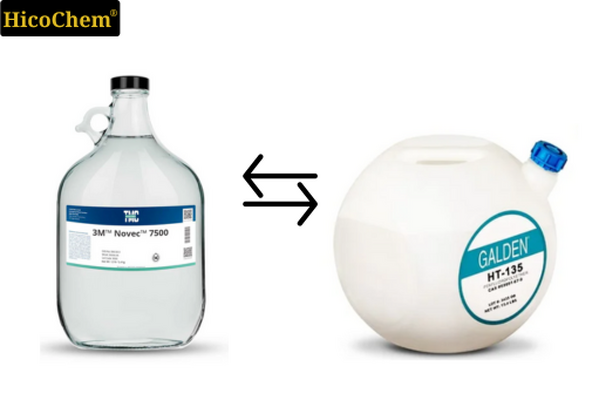
Galden HT135 - Premium PFPE Alternative to 3M™ Novec™ 7500
Hicotech introduces Galden HT-135, a premium-grade PFPE heat transfer fluid developed to deliver consistent performance and serve as a dependable replacement for 3M™ Novec™ 7500 in sophisticated thermal management systems.